Apple's New Desktops: Powering Local AI Development with M6 and M5 Ultra Chips
Apple's latest Mac mini and Mac Studio refreshes focus on local AI development, featuring the new M6 and M5 Ultra chips for enhanced performance. Discover how these updates cater to developers and researchers working with AI workloads.
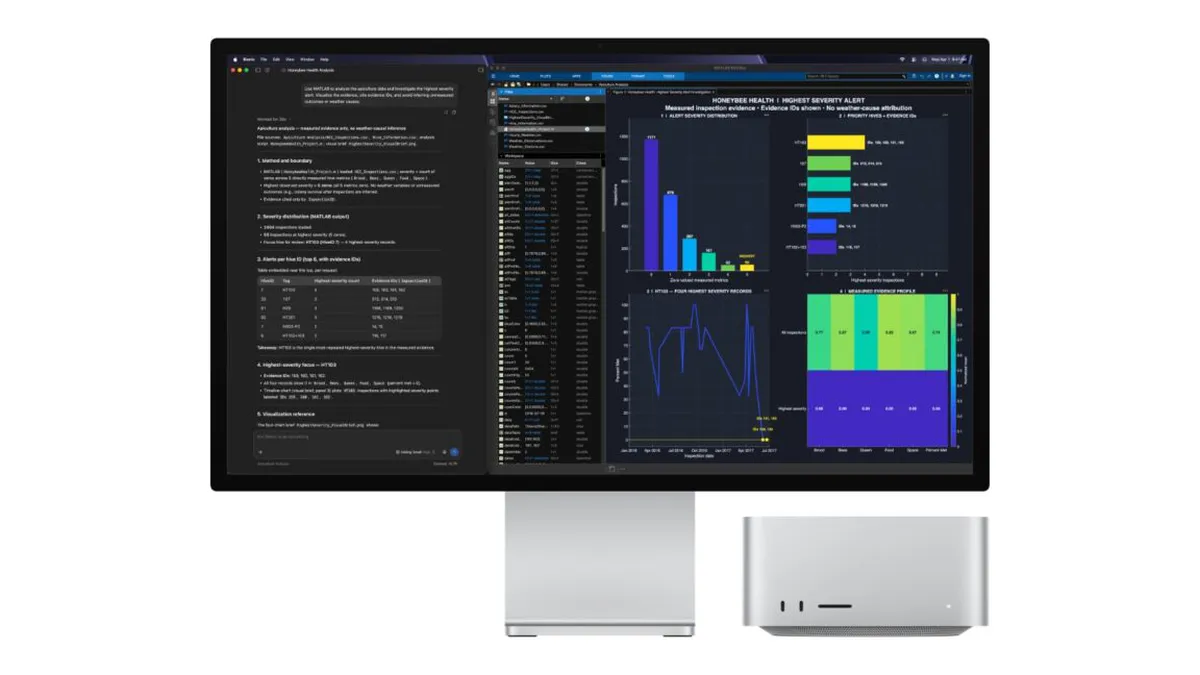
The landscape of artificial intelligence is rapidly evolving, and Apple has strategically positioned itself to cater to this burgeoning field. With the launch of the latest versions of the Mac mini and Mac Studio, the tech giant is doubling down on local AI development, providing developers and researchers with powerful and efficient tools. The new M6 and M5 Ultra chips promise unprecedented performance for local AI workloads, making these devices an appealing choice for those looking to harness the power of artificial intelligence without relying on cloud infrastructure.
This article delves into the significant upgrades of these new desktops, the technical specifications of the chips, and the implications for both hobbyists and professional developers in the AI space.
Revolutionizing AI Development: The Role of M6 and M5 Ultra Chips
At the core of Apple's new desktops are two groundbreaking chips: the M6 and the M5 Ultra. Both chips are designed to provide enhanced performance, particularly in local AI inference and software development. The M6 chip, notable for being the first 2nm chip in Apple's M-series lineup, features a 12-core CPU that includes two “super cores,” four performance cores, and six efficiency cores. Apple claims that this chip is up to 40% faster in multi-threaded CPU performance compared to the previous M4 chip, which is a significant leap for developers looking to handle complex AI tasks efficiently.
Powerful Graphics and Memory Capabilities
The M6 chip also boasts a 12-core GPU, providing two additional cores compared to its predecessor, along with faster unified memory capable of delivering up to 160GB per second of bandwidth. However, the memory capacity is limited to 32GB, which may not suffice for some demanding AI applications. This is where the M5 Ultra chip comes into play, offering a staggering maximum memory capacity of 512GB. It essentially combines the power of two M6 Max chips, featuring 36 CPU cores and 80 GPU cores, making it an ideal solution for intensive AI workflows.
Enhanced AI Workflows through Unified Memory Architecture
One of the standout features of Apple’s M-series chips is their unified memory architecture, which allows the CPU and GPU to access the same memory pool. This design is crucial for AI workloads, as it minimizes latency and maximizes performance. Local inference for large language models (LLMs) has gained traction among developers, especially after the introduction of features in macOS 26.2 that support low-latency communication between Thunderbolt 5 hosts. The MLX framework, specifically engineered for machine learning workflows, enables developers to leverage the full capabilities of the M-series chips.
- **Mac mini with M6:** Starting at $899
- **Mac Studio with M5 Max:** Starting at $2,499
- **Mac Studio with M5 Ultra:** Starting at $5,499
Market Dynamics: The Shift Towards Local AI Inference
The rapid rise of local AI inference is reshaping how developers approach artificial intelligence. Traditionally, many relied on cloud-based models, which often come with high operational costs due to token usage and other fees. However, as powerful open-weight models become available for local execution—such as Qwen and DeepSeek—developers are increasingly looking to run these models on their workstations.
This shift is particularly relevant as cloud costs continue to rise, prompting many to reconsider their strategies. The high-performance capabilities of the new Mac desktops allow developers to run larger models than typical consumer hardware can accommodate, making them invaluable for those who want to harness advanced AI tools without incurring expensive cloud fees.
Technical Specifications and Pricing Overview
As Apple positions its new desktops as leaders in AI development, the pricing reflects their target audience: professionals and serious developers. The Mac mini with the M6 chip starts at $899, while configurations with the M5 Pro chip begin at $1,699. For those opting for the Mac Studio, the M5 Max starts at $2,499, and the high-end M5 Ultra configurations start at $5,499. These prices can escalate significantly with additional memory and storage upgrades.
The preorders for both desktops started immediately, with shipping set for September 22. Additionally, both models are expected to ship with macOS 27, a sign of Apple’s commitment to supporting its latest hardware with cutting-edge software.

Implications for Developers and the AI Community
The advancements in Apple's desktop offerings are likely to have profound implications for the AI community. As more developers embrace AI coding agents and workflows, the demand for powerful local computing solutions will only increase. The ability to run sophisticated models locally not only reduces costs but also enhances the speed at which developers can iterate and deploy their solutions.
For those working on AI applications, the combination of the M6 and M5 Ultra chips could represent a significant upgrade, enabling the execution of tasks that were previously too demanding for standard consumer hardware. This shift towards local processing aligns with broader trends in the tech industry, where efficiency and cost-effectiveness are paramount.
Key Takeaways
- Apple's new Mac mini and Mac Studio are optimized for local AI development.
- The M6 chip offers a 12-core CPU and improved GPU performance for AI workloads.
- The M5 Ultra chip boasts a maximum memory capacity of 512GB and unparalleled unified memory bandwidth.
- Local AI inference is gaining traction as developers seek cost-effective alternatives to cloud solutions.
- Pricing ranges from $899 for the Mac mini to $5,499 for top-tier Mac Studio configurations.

Frequently Asked Questions
What makes the M6 and M5 Ultra chips different from previous models?
The M6 and M5 Ultra chips represent a significant evolution in Apple's chip technology. The M6 is built on a 2nm process, enhancing its efficiency and performance capabilities, particularly for multi-threaded tasks. It also debuts a new architecture that includes three types of cores—super, performance, and efficiency—allowing for greater flexibility in task execution. The M5 Ultra doubles down on power, combining the capabilities of two M6 Max chips, making it ideal for demanding applications like AI inference.
How does Apple's unified memory architecture benefit AI development?
Apple's unified memory architecture enables the CPU and GPU to share the same memory pool, which minimizes data transfer times and maximizes efficiency. This is particularly beneficial for AI development, where tasks often require rapid access to large datasets. With the new M-series chips, developers can expect higher throughput and lower latency, facilitating smoother and faster AI workflows.
What is the significance of local AI inference over cloud-based solutions?
Local AI inference allows developers to execute AI models on their own hardware, reducing dependency on cloud services and associated costs. This approach not only minimizes latency but also enhances data privacy, as sensitive information does not need to be transmitted over the internet. With the advancements in Apple's latest desktops, local inference is becoming more viable, enabling developers to leverage powerful AI tools without incurring hefty fees from cloud providers.
Are these new Macs suitable for gaming as well?
While both the Mac mini and Mac Studio are designed with AI workloads in mind, their powerful graphics capabilities and increased memory bandwidth also make them suitable for gaming. The M6 and M5 Ultra chips can handle demanding 3D graphics applications, making these desktops versatile enough for both AI development and gaming. However, potential buyers should consider their primary use case to ensure they choose the right configuration for their needs.
Comments
Generalist Achieves $3 Billion Valuation: Implications for Robotics and AI
Robotics startup Generalist has reached a significant $3 billion valuation following a $200 million funding round. This article explores the implications for the robotics industry and the potential for AI-driven automation.

Related articles
Popular in Developer Tools
- Why Greylock Partners Caps Fund Size in a Growing Industry
- Roblox Unleashes AI-Powered Game Creation for Mobile Users
- DeepSeek Launches Open Source Alternative to Claude Code, Ups API Pricing
- Cursor Launches Origin: A New Challenger to GitHub's Dominance
- Apple's Camera-Equipped AirPods: Innovation or Invasion?