Navigating the Costly Landscape of AI Coding Agents: Insights from Industry Leaders
As AI coding agents become integral to software development, enterprises face budget challenges, prompting leaders from Replit, Kilo Code, and Symbotic to share strategies for managing costs effectively.
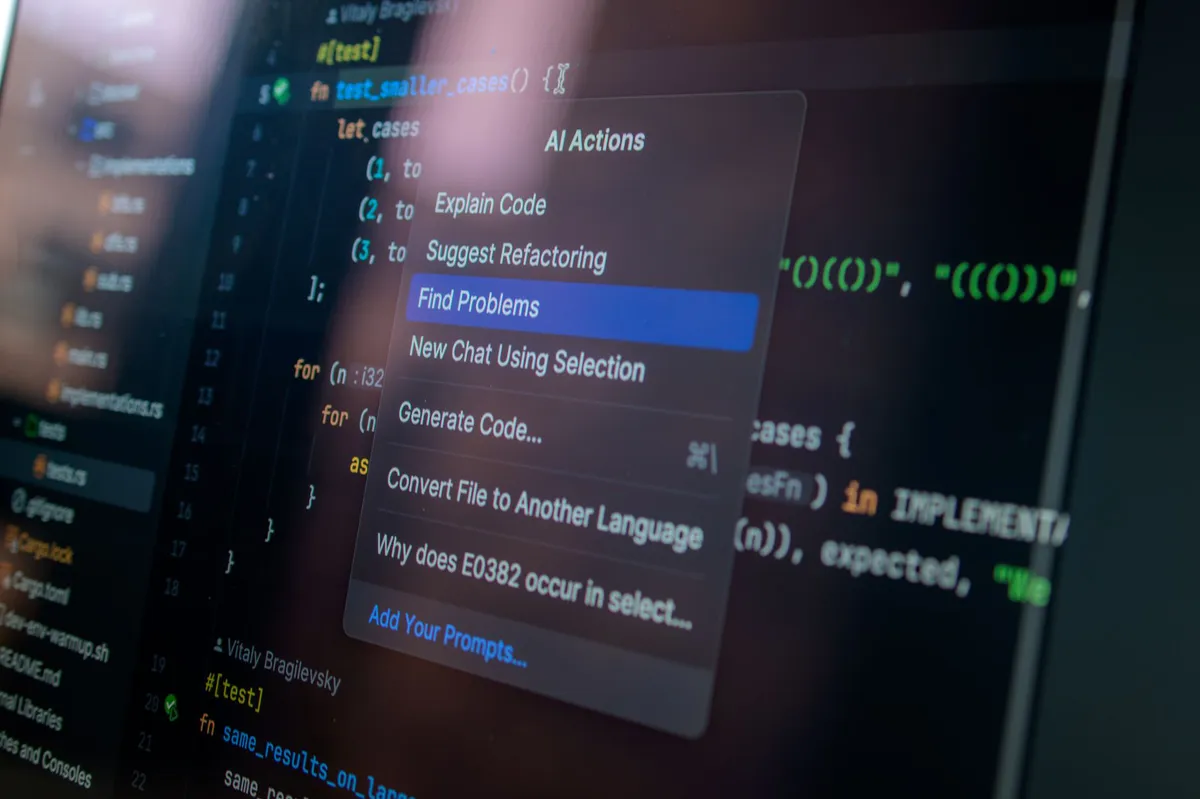
In the rapidly evolving landscape of software development, AI coding agents have shifted the paradigm from human-led coding to machine-driven processes. Companies like Replit, Kilo Code, and Symbotic are at the forefront of this transformation, embracing AI's capabilities to streamline workflows and enhance productivity. However, this transition is not without its challenges, particularly regarding budget management. As these AI systems become more prevalent, enterprises are grappling with soaring costs and the complexities of integrating AI effectively into their development processes.
According to Emilie Schario, co-founder of Kilo Code, engineers now spend less than 1% of their time reading or writing code, as AI agents take on the heavy lifting. This dramatic shift raises critical questions about the delegation of coding tasks, accountability for errors, and the overall cost-effectiveness of AI integration. As Schario and her peers navigate these waters, it becomes clear that companies must rethink their strategies for managing AI-related expenses while maximizing the potential of these powerful tools.
The Evolution of AI in Software Development
The integration of AI into software development is not merely a trend; it represents a fundamental change in how code is created and maintained. Jared Go, distinguished engineer for AI and cloud at Symbotic, highlights the importance of directing AI's focus towards security, code quality, and efficiency. "Greenfield projects—developing new codebases—are straightforward for AI agents. In contrast, brownfield projects, which involve updating or maintaining existing code, pose significant challenges," Go explains.
This distinction is crucial for understanding where AI can provide value and where human oversight remains indispensable. While AI excels in generating new code, the nuances of existing systems often require human insight. The collaboration between human engineers and AI agents is pivotal in achieving optimal outcomes.

Implementing Human Oversight in AI Coding
Replit’s approach to AI coding illustrates a balanced strategy that emphasizes human oversight while leveraging AI's capabilities. Amol Jain, head of product engineering at Replit, describes a system where each pull request (PR) is reviewed by an AI agent that assigns a risk score. Low-risk PRs are auto-merged, while higher-risk submissions undergo human review.
This model exemplifies the concept of being "human on the loop" rather than "in the loop." This distinction is vital as it allows AI to perform the bulk of the coding tasks while ensuring that human developers remain engaged in critical decision-making processes. Jain notes, "Our internal tool operates like a self-driving system for software engineers, enabling them to assign tasks to agents for end-to-end planning, implementation, and testing." This hands-free approach enhances productivity but also necessitates robust monitoring to prevent runaway costs.
Managing Costs and the 'Tokenmaxxing' Dilemma
As enterprises increasingly adopt AI coding agents, budget management becomes a pressing concern. The phenomenon known as 'tokenmaxxing' has emerged as organizations seek to track and cap their AI usage to avoid unexpected expenses. Schario notes that organizations face dilemmas such as, "I accidentally spent my whole AI budget for the year… so what do I do now?" This situation underscores the importance of strategic planning and monitoring.
Kilo Code advocates for a layered approach to AI model usage: employing expensive, advanced models for initial planning stages and transitioning to more cost-effective, open-weight models for the remainder of the project. This strategy not only optimizes costs but also aligns the choice of technology with project requirements. Schario emphasizes the need for strong guidance and skill-sharing to help teams maximize the benefits of the AI models they utilize.

The Multi-Model Future: Flexibility and Efficiency
The demand for flexibility in AI solutions is prompting providers to evolve beyond traditional models. Kilo Code supports over 500 AI models, allowing clients to choose the most suitable options for their needs. Schario explains, "Your software for agentic engineering should be decoupled from the model you use to execute it." This flexibility enables companies to switch between models based on project requirements, budget considerations, and performance criteria.
Replit is also keenly aware of the cost versus capability spectrum, often making decisions on behalf of users about which models to deploy and when. Jain emphasizes, "We aim to minimize costs while maximizing capability, ensuring that teams can focus on delivering value rather than worrying about costs." This proactive approach can significantly mitigate the financial impact of AI integration.

Monitoring Effectiveness and Measuring ROI
As AI deployment expands, so too does the importance of measuring effectiveness and return on investment (ROI). Schario points to a specific engineer within Kilo Code whose usage habits necessitate close monitoring. "I regularly have to nudge, 'What are you doing there?'" she admits, highlighting the need for vigilance around AI usage. Tracking metrics like cost per pull request has become essential in assessing the value generated by AI-driven coding processes.
Symbotic has implemented cost tiers for employees, giving managers visibility into PRs and usage trends. This system allows for dynamic adjustments based on usage patterns, ultimately promoting efficiency while curtailing excessive spending. As Go explains, "Having a cap and monitoring how many users increase their tier each month can significantly impact how we manage costs and improve efficiency." This practice encourages a culture of accountability and responsible usage as employees become more aware of their impact on the budget.
Key Takeaways
- AI coding agents are transforming software development, with engineers spending less than 1% of their time coding.
- Human oversight remains essential, especially in brownfield projects where existing code requires expert input.
- Enterprises face budget challenges with AI adoption, prompting strategies like 'tokenmaxxing' to control costs.
- Flexibility in model selection is crucial; companies should utilize a mix of advanced and cost-effective models.
- Measuring ROI and monitoring usage patterns can help organizations make informed financial decisions regarding AI integration.
Frequently Asked Questions
What are AI coding agents, and how do they work?
AI coding agents are software tools that automate various aspects of the coding process. They can generate code, review pull requests, and provide suggestions based on predefined criteria. These agents work by analyzing existing codebases and applying machine learning algorithms to produce outputs that meet specified requirements. As a result, they can significantly reduce the time and effort required for software development tasks.
How can companies manage costs associated with AI coding agents?
To manage costs effectively, companies should implement strategies such as 'tokenmaxxing,' which involves tracking and capping AI usage to prevent overspending. Additionally, organizations can use a tiered system for AI model selection, opting for more expensive models during initial planning phases and switching to more affordable options for execution. Regular monitoring and assessment of AI performance and ROI can help identify areas for cost optimization.
What role does human oversight play in AI coding?
Human oversight is critical in the AI coding process, particularly when dealing with complex or existing codebases. While AI agents can automate many tasks, they lack the contextual understanding and decision-making capabilities that human engineers possess. Therefore, maintaining a balance between automated processes and human review ensures that the output meets quality standards and aligns with project objectives.
What metrics can organizations use to assess the effectiveness of AI coding agents?
Organizations can measure the effectiveness of AI coding agents through various metrics, including cost per pull request, the speed of code generation, and the quality of output. Tracking these metrics allows companies to evaluate the return on investment from AI tools and make informed decisions about their ongoing usage and integration into the development workflow.
Comments
Exploring Google Pixel 11's HiLight Feature: A New Era of Notifications
Google's Pixel 11 introduces HiLight, a multicolor LED feature that revives the essence of notification systems while integrating with AI. Here's what you need to know.

Related articles

Popular in Developer Tools
- Why Greylock Partners Caps Fund Size in a Growing Industry
- Roblox Unleashes AI-Powered Game Creation for Mobile Users
- DeepSeek Launches Open Source Alternative to Claude Code, Ups API Pricing
- Cursor Launches Origin: A New Challenger to GitHub's Dominance
- Apple's Camera-Equipped AirPods: Innovation or Invasion?