Swift Rescue Mission Faces Challenges Amid Reaction Wheel Failures
The Link satellite, designed to rescue NASA's Swift observatory, is grappling with attitude control issues just weeks after its launch. This article explores the implications of these technical challenges and the importance of the mission.
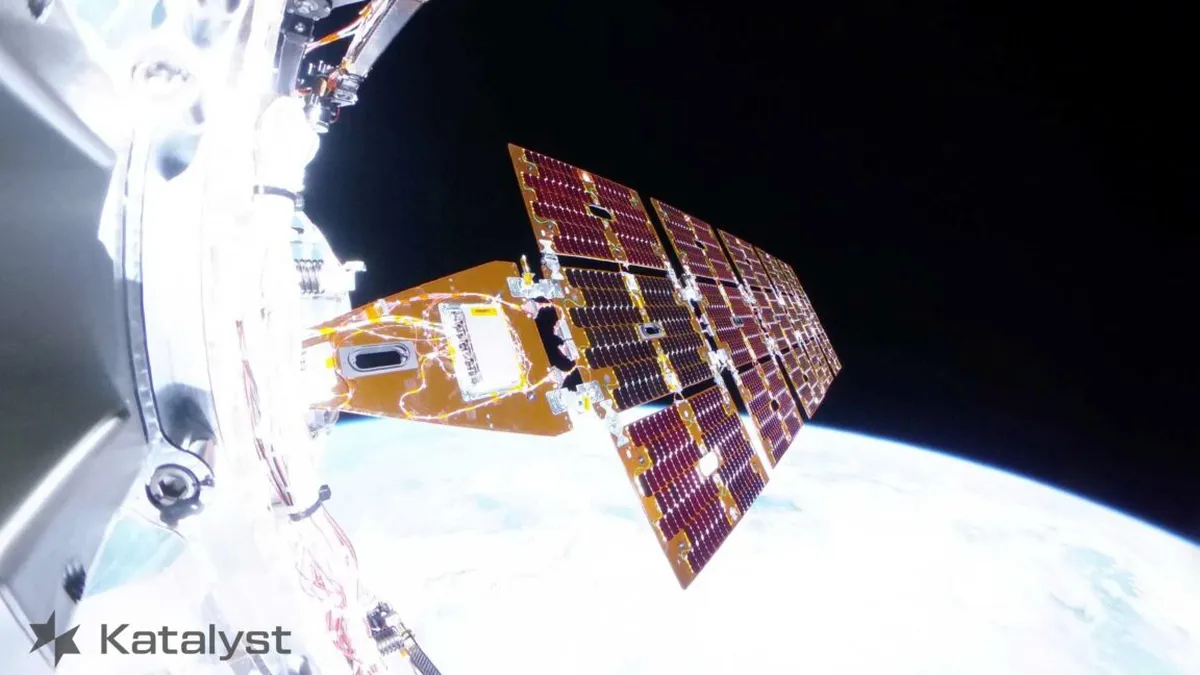
In a groundbreaking mission that could redefine the landscape of satellite servicing, Katalyst Space Technologies' Link satellite was launched on July 3 to save NASA's Neil Gehrels Swift Observatory from an impending fiery descent. However, just weeks into its mission, the satellite is facing significant technical challenges, primarily revolving around its attitude control systems. These issues pose a threat not only to the mission's success but also to the future of commercial satellite servicing.
The Link satellite was designed to rescue Swift, a nearly 22-year-old observatory that specializes in detecting gamma-ray bursts, the most powerful explosions in the universe. NASA's decision to engage Katalyst for this mission, worth $30 million, reflects a broader strategy to bolster the capabilities of commercial space operations while extending the life of valuable scientific instruments in orbit.
Understanding the Technical Hurdles
The primary issue reported by NASA is that two of Link's three reaction wheels are currently inoperable. Reaction wheels are critical components used to control a satellite's orientation in space without expending fuel. They work by spinning in one direction to create angular momentum that allows the satellite to rotate in the opposite direction. This is vital for maintaining the proper alignment of instruments, particularly when performing delicate maneuvers such as docking with another satellite.
The Role of Cold Gas Thrusters
In addition to the malfunctioning reaction wheels, there is also a reported loss of functionality in Link's cold gas thruster system. Cold gas thrusters offer more precise control and are often employed for fine-tuning a satellite's trajectory, especially during critical phases of a mission. As Link approaches the Swift satellite, the need for reliable attitude control becomes paramount.
The Mission's High Stakes
The Link mission is not just about saving the Swift observatory; it is also a test case for the burgeoning commercial satellite servicing industry. NASA is keen on exploring how private companies can contribute to extending the life of existing assets in space, which could lead to significant cost savings and improvements in operational efficiency.
NASA's Swift observatory has surpassed its original mission lifespan, and without intervention, it is projected to reenter Earth's atmosphere and burn up within months. The stakes are high, as Swift is one of the few missions capable of monitoring gamma-ray bursts. Losing it would mean a significant setback in astrophysical research and our understanding of the universe.
Revising Expectations and Plans
Despite these challenges, NASA officials have expressed optimism. Shawn Domagal-Goldman, director of NASA's astrophysics division, has stated that the mission's very attempt is already a success from a programmatic standpoint. Katalyst's ability to launch the Link satellite within nine months—a remarkably short timeline for such a complex operation—demonstrates the potential of commercial partnerships in space exploration.
The Path Ahead for Link
As the situation unfolds, Katalyst is actively working on solutions to address the attitude control issues. The company plans to utilize Link's xenon-fueled electric thrusters, initially intended for orbit-raising maneuvers, to stabilize the satellite's orientation. While this was not the original design intent, it highlights the flexibility and resilience required in space missions.
Once stable communication and control are reestablished, Katalyst will update Link’s guidance, navigation, and control systems to adapt to the current circumstances. The goal is to ensure a safe approach and capture of the Swift observatory, which is critical for the success of the mission.
Commercial Space Operations: A New Frontier
The challenges faced by the Link satellite are emblematic of the broader risks and uncertainties in commercial space operations. As more private companies venture into satellite servicing and other space-related activities, the industry is learning valuable lessons about reliability, risk management, and the technological hurdles that accompany innovation.
Katalyst's experience with Link could pave the way for future missions that rely on commercial partners to maintain and enhance existing space assets. This mission also serves as a proving ground for technologies that could eventually be applied to more ambitious projects, such as asteroid mining, satellite refueling, and even interplanetary travel.
- Understanding Mission Objectives: NASA aims to extend Swift's mission while testing commercial satellite servicing capabilities.
- Importance of Reaction Wheels: These components are vital for a satellite's attitude control and operational success.
- Future Implications: The outcome of this mission could influence future commercial partnerships in space.
- Cost-Effectiveness: Engaging commercial entities may lead to significant savings and efficiencies in space operations.
Key Takeaways
- The Link satellite is facing critical technical issues with its reaction wheels, impacting its ability to stabilize in orbit.
- NASA's swift observatory is in danger of reentering the Earth's atmosphere without the Link satellite's interventions.
- Despite challenges, the mission represents a significant step forward for commercial satellite servicing initiatives.
- Katalyst is exploring alternative strategies to stabilize Link using its electric thrusters.
Frequently Asked Questions
What are reaction wheels and why are they important for satellites?
Reaction wheels are mechanical devices used on spacecraft to control their orientation without using fuel. They function by spinning at different speeds to create angular momentum, which allows a satellite to rotate. This is crucial for maintaining the correct positioning of instruments onboard, especially during maneuvers such as docking or observation operations.
What is the role of cold gas thrusters in satellite operations?
Cold gas thrusters are used for finer control of a satellite's movement and orientation. They expel gas to produce thrust, allowing for precise adjustments. In missions like that of Link, they are essential for delicate maneuvers when approaching another satellite, ensuring that operations can be conducted safely and effectively.
What are the implications of this mission for the future of space exploration?
The Link mission is significant not only for its attempt to rescue the Swift observatory but also as a demonstration of the potential for commercial companies to play a role in satellite servicing. Successful completion of this mission could pave the way for future partnerships and technologies that extend the life of existing space assets, reduce costs, and increase efficiency in space operations.
How can Katalyst overcome the current challenges faced by Link?
Katalyst is currently working on solutions to stabilize the Link satellite using its electric thrusters, which were initially designed for orbit-raising maneuvers. By adapting these systems to address the attitude control issues, Katalyst hopes to reestablish communication and control, enabling the satellite to proceed with its planned mission objectives to rescue the Swift observatory.
Comments
Navigating Community Demands: The Data Center Debate in Plymouth Township
As data centers proliferate across the U.S., Plymouth Township's stringent requirements for a new facility highlight the tension between development and community concerns. This article delves into the ongoing conflict and its implications for future tech infrastructure projects.

Related articles
Popular in Cloud Computing
- SK Hynix's Historic $26.5 Billion IPO: A New Era for Memory Chips
- Kubernetes and the Future of Desktop Infrastructure: A Paradigm Shift
- Amazon Expands Partnership with Nvidia, Tripling GPU Orders Amid AI Demand Surge
- Elon Musk's Evolving Relationship with Anthropic: A New Era for AI Hosting
- Emerging Rocket Launches: A New Era for Space Exploration