Nvidia's $21 Billion Stake in SpaceX: A Strategic Move in AI and Space Tech
Nvidia's significant investment in SpaceX reflects the growing intersection of AI and aerospace. This $21 billion stake showcases Nvidia's strategy to leverage its financial power to cement partnerships and drive innovation in the tech landscape.
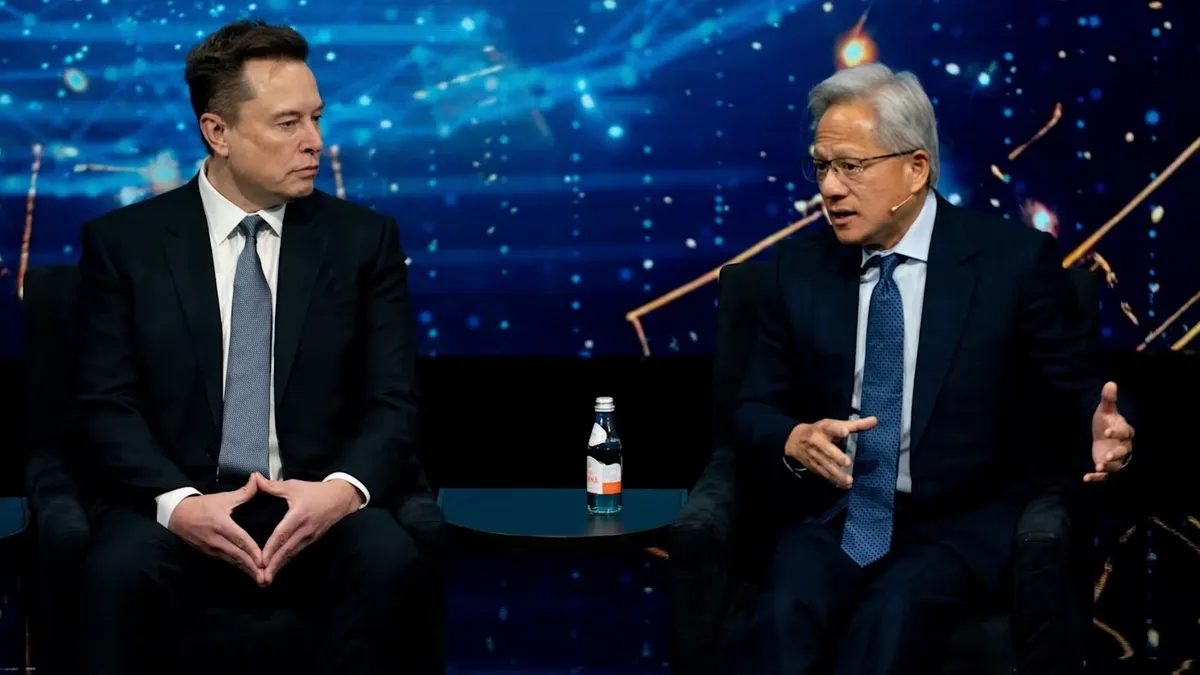
In a bold financial maneuver that underscores the intricate ties between the worlds of artificial intelligence (AI) and aerospace, Nvidia has disclosed a staggering $21 billion stake in SpaceX. This announcement, made through an SEC filing, marks a pivotal moment for both companies, intertwining their futures in ways that could reshape the tech landscape. Nvidia's ownership of nearly 123 million shares in SpaceX highlights not only the chipmaker's significant investment strategy but also the expanding influence of AI in sectors previously dominated by traditional engineering and manufacturing.
Elon Musk, the maverick entrepreneur behind SpaceX, has consistently pushed the boundaries of technology, and his latest partnership with Nvidia signals a new era of collaboration. As Musk declared during SpaceX’s recent earnings call, the company has an exclusive arrangement with Nvidia to equip its data centers, a decision driven by the belief that Nvidia's Vera Rubin architecture represents the pinnacle of AI computing capabilities. This partnership aligns with Nvidia's aggressive investment strategy in AI, which has seen the company allocate over $100 billion to various AI companies within the last two years.
Nvidia's Expanding Role in AI Infrastructure
Nvidia's investment in SpaceX is not an isolated event; it is part of a larger pattern of strategic partnerships aimed at solidifying its position as a leader in the AI space. The company has poured resources into cloud computing startups like CoreWeave and AI labs such as Thinking Machines and Safe Superintelligence. Furthermore, Nvidia's recent acquisition of Cursor, a code-editing startup purchased by SpaceX for an eye-popping $60 billion, illustrates the interconnected nature of these investments.
With the tech industry experiencing rapid advancements in AI capabilities, Nvidia’s financial muscle allows it to drive innovation at an unprecedented scale. The company is now orchestrating a consortium of investors—including heavyweights like Apollo Global, Blackstone, and Goldman Sachs—to amass over $500 billion aimed at financing technological advancements. This approach not only strengthens Nvidia's partnerships but also ties the fortunes of numerous startups and established companies to its chip technology, creating a complex web of dependencies.
The Impact of SpaceX's IPO
The recent IPO of SpaceX has significantly altered the financial landscape for the company and its stakeholders. Although shares have dipped since their initial public offering, the overall returns for early investors have been monumental. For instance, Google, which invested $900 million in SpaceX in 2015, now holds a stake valued at approximately $94 billion, representing a staggering return on investment. This performance reflects the increasing importance of space technology as a viable and lucrative sector within the broader tech ecosystem.
Elon Musk's vision for SpaceX includes a substantial ramp-up in computing capacity, with plans to increase from 2 gigawatts (GW) at the end of this year to a projected 10 GW by the end of 2027. Such ambitious goals necessitate robust partnerships with technology providers like Nvidia, whose chips are critical to powering the AI-driven applications that SpaceX aims to develop.
The Strategic Implications for Nvidia and SpaceX
For Nvidia, this investment in SpaceX represents a dual opportunity. Firstly, it solidifies its status as an indispensable partner in the rapidly evolving AI landscape, where its chips are integral to developing advanced computing solutions. Secondly, it allows Nvidia to leverage SpaceX's technological advancements to enhance its own product offerings, thereby creating a feedback loop that benefits both entities.
Musk’s statement regarding the exclusive partnership emphasizes a commitment to innovation: "We’ve decided to build exclusively on Nvidia because we think [its] Vera Rubin architecture is the best architecture." This declaration not only highlights the competitive edge that Nvidia holds in AI computing but also underscores the reliance of cutting-edge companies on its technology. As more industries recognize the value of AI, Nvidia's strategic positioning could lead to a monopolistic hold on the AI hardware market.
Financial Ecosystem and Market Dynamics
The financial ecosystem surrounding Nvidia and SpaceX is multifaceted. Nvidia's strategy of partially guaranteeing loans through a consortium of investors backed by the value of its chips signifies a shift in how tech companies are financing their growth. This innovative funding mechanism could pave the way for more startups to access capital, reducing barriers to entry in the tech market.
Moreover, the intertwining of Nvidia's financial power with its customers raises essential questions about market dynamics and competition. As Nvidia gains more influence, smaller players may find it increasingly difficult to compete, especially those who rely on Nvidia's technology for their products. This could stifle innovation in the long run unless regulatory measures are introduced to maintain a level playing field.
- Nvidia's $21 billion stake in SpaceX highlights the growing importance of AI in aerospace.
- Partnerships between tech giants like Nvidia and SpaceX are reshaping industry standards.
- SpaceX's ambitious plans for increased computing capacity will further integrate AI in space technology.
- The financial strategies employed by Nvidia could redefine funding mechanisms in the tech industry.

Key Takeaways
- Nvidia's $21 billion investment underscores a strategic alliance that could redefine AI and aerospace.
- SpaceX’s exclusive partnership with Nvidia enhances both companies' technological capabilities.
- The financial maneuvers surrounding Nvidia are set to impact the broader tech financing landscape.
- As AI becomes increasingly vital, Nvidia's role as a primary provider could lead to monopolistic tendencies.
Frequently Asked Questions
What does Nvidia's investment in SpaceX mean for the AI industry?
Nvidia's investment in SpaceX is a significant endorsement of the growing intersection between AI and aerospace technology. By aligning with a company known for its innovative approaches to space travel, Nvidia signals its commitment to driving advancements in AI that can support complex aerospace applications. This partnership may lead to new AI-driven technologies that enhance SpaceX's operations, thereby setting industry standards for AI integration in aerospace.
How does the financial relationship between Nvidia and SpaceX work?
The financial relationship between Nvidia and SpaceX is characterized by Nvidia's substantial equity stake and its exclusive arrangement to supply technology for SpaceX's data centers. This entanglement allows both companies to benefit financially and technologically. As SpaceX expands its computing infrastructure, it will rely heavily on Nvidia's chips, thus creating a cyclical dependency that fortifies Nvidia's market position while aiding SpaceX's growth ambitions.
What are the potential risks of such a close partnership?
While the partnership between Nvidia and SpaceX offers numerous advantages, it also poses risks. The dependency on Nvidia's technology could leave SpaceX vulnerable to price fluctuations or supply chain issues affecting Nvidia. Additionally, the concentration of power within Nvidia raises concerns about market monopolization, where smaller competitors struggle to gain traction in the face of such an influential player dominating the landscape.
How might this investment impact future AI developments?
Nvidia's investment in SpaceX is likely to accelerate AI developments due to the increased resources and collaboration between the two companies. By pooling their expertise, they can drive innovations that could lead to breakthroughs in AI applications, especially in areas like autonomous systems and data processing. This partnership could also inspire other tech companies to form similar alliances, further pushing the boundaries of what is possible with AI.
Comments
Nvidia Bets Big on AI: $1.5B Investment in SB Energy Data Center
Nvidia's $1.5 billion investment in SB Energy marks a significant step in the AI landscape, ensuring exclusive computing power for OpenAI. This investment could reshape the data center industry while raising questions about energy costs and supply.
Related articles
Popular in Cloud Computing
- SK Hynix's Historic $26.5 Billion IPO: A New Era for Memory Chips
- Kubernetes and the Future of Desktop Infrastructure: A Paradigm Shift
- Amazon Expands Partnership with Nvidia, Tripling GPU Orders Amid AI Demand Surge
- Elon Musk's Evolving Relationship with Anthropic: A New Era for AI Hosting
- Emerging Rocket Launches: A New Era for Space Exploration