Revolutionary Discoveries from the World's Largest Solar Telescope
Using the Daniel K. Inouye Solar Telescope, researchers have uncovered vortexes on the Sun's surface, potentially reshaping our understanding of solar dynamics and heat transfer.
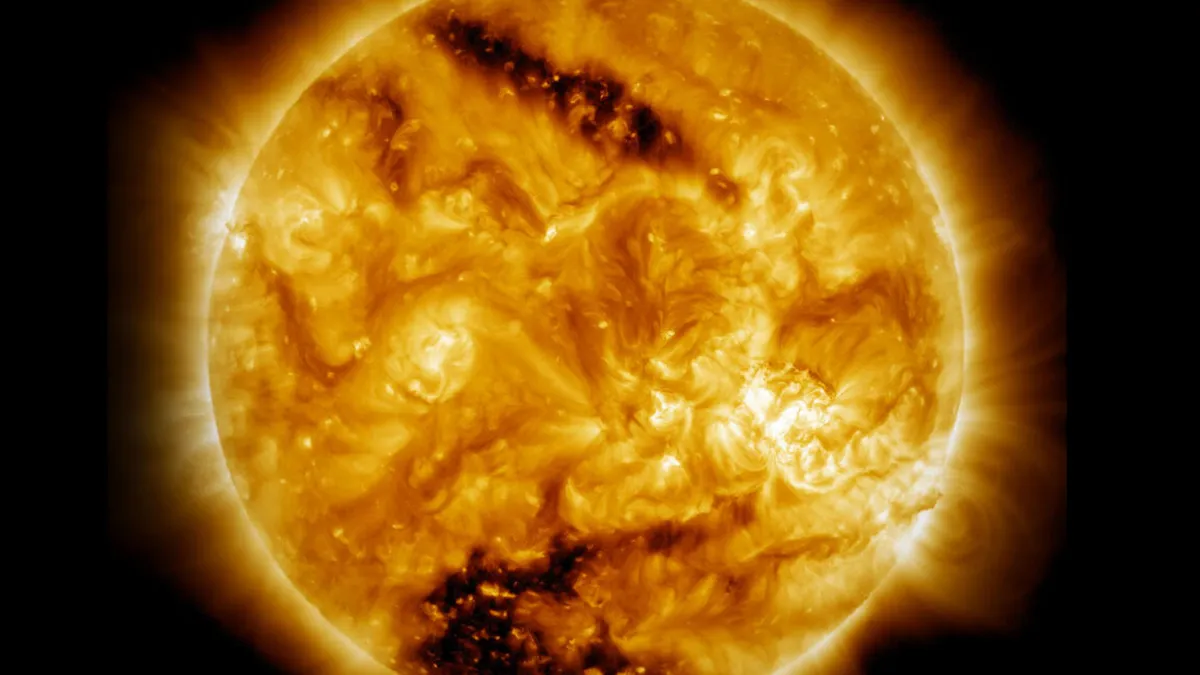
In a groundbreaking revelation, scientists have captured previously unseen vortex-like structures on the Sun's surface, thanks to the advanced capabilities of the Daniel K. Inouye Solar Telescope (DKIST). This remarkable telescope, the largest of its kind in the world, has provided new insights into the dynamics of solar plasma, challenging long-held assumptions about the Sun's behavior. The research team, led by David Kuridze and Friedrich Wöger, has demonstrated that Kelvin-Helmholtz instabilities exist in abundance on the solar surface, suggesting a complex interplay of heat, mass, and magnetic forces that influences solar phenomena.
The discovery is not merely a scientific curiosity; it holds significant implications for our understanding of solar physics, particularly how energy transfers throughout the Sun's atmosphere. With the potential to reshape theories surrounding solar convection and magnetic interactions, these findings offer a fresh perspective on the mechanics driving solar eruptions and flares, phenomena that have profound effects on space weather and, consequently, on Earth.
The Science Behind Solar Vortexes
The Kelvin-Helmholtz instability, a well-known phenomenon in fluid dynamics, occurs when two fluids move past each other at different velocities, causing the boundary between them to form waves that can evolve into vortices. This instability is responsible for various observable patterns in nature, from ripples in water to cloud formations. Scientists have long theorized that similar mechanisms operate on the solar surface, where plasma behaves like a fluid. However, confirming their existence has been challenging due to the limitations of traditional telescopes.
Observational Breakthroughs with DKIST
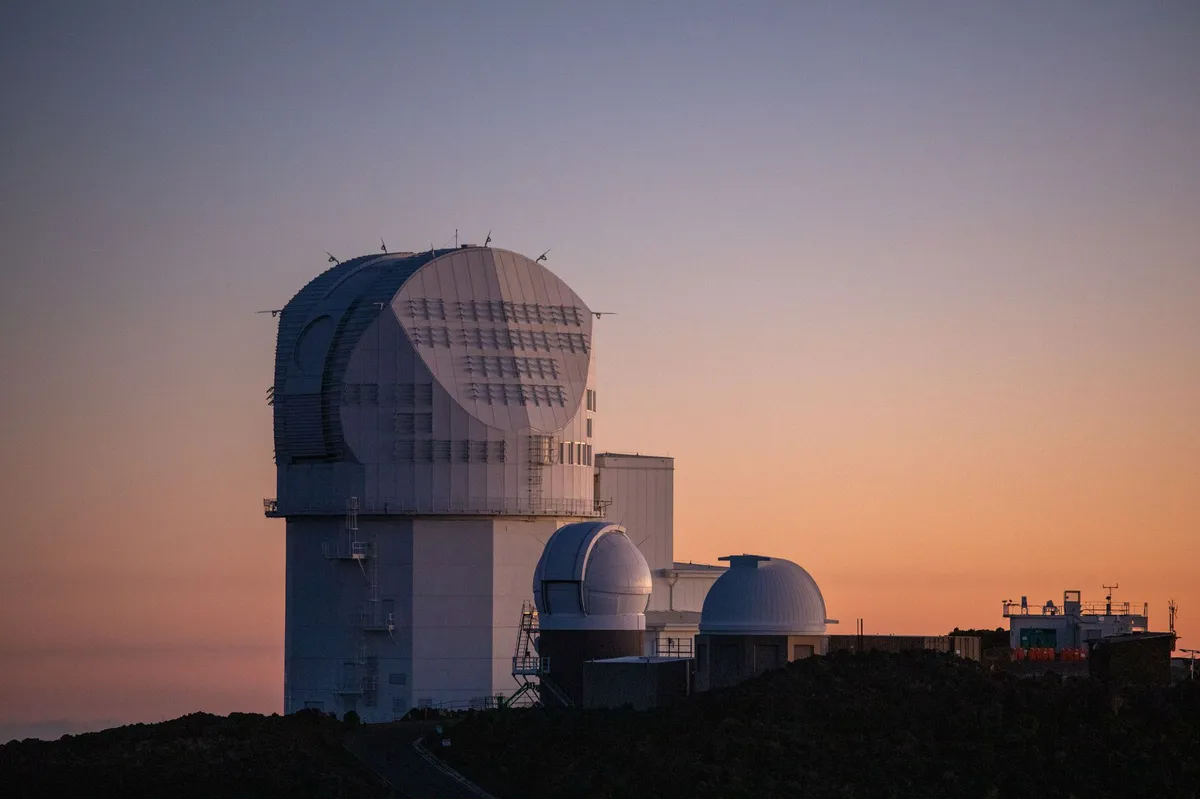
The DKIST, operational since November 2021, is a 4-meter telescope situated in Hawaii, designed to observe solar phenomena with unprecedented resolution. The study conducted by Kuridze and Wöger involved a focused observation of an active solar region, capturing images at a wavelength of 416 nanometers—a choice aimed at maximizing diffraction-limited performance. This wavelength falls within the visible spectrum, allowing for detailed imaging of solar granules and magnetic fields.
During a critical observation window on April 14, 2025, the team recorded 740 frames per second, ultimately creating a high-resolution movie of the solar surface. The resulting imagery revealed distinct vortex-like structures and dark striations at the interfaces between magnetic fields and granules, providing visual evidence of the previously elusive Kelvin-Helmholtz instabilities.

Implications for Solar Physics
The presence of these vortex structures challenges existing models of solar convection and magnetic field interactions. Traditionally, strong magnetic fields are thought to suppress plasma motion, as exemplified by sunspots, which are cooler and darker areas on the solar surface created by intense magnetic activity. However, the vortexes observed by the DKIST indicate a stirring mechanism that allows for the interaction between magnetized and unmagnetized gases.
Understanding Energy Transfer
One of the most significant implications of this discovery pertains to energy transfer within the Sun. The chaotic motion induced by these vortexes could facilitate the mixing of cooler materials from the edges of convection cells into magnetic regions, altering heat distribution beneath the solar surface. This interaction could enhance our understanding of how energy is transported throughout the solar atmosphere, particularly in the corona, which reaches temperatures exceeding one million degrees Celsius.
Moreover, the twisting motions observed at the solar surface may also play a critical role in the braiding and release of magnetic energy, a process that has been hypothesized to contribute to solar flares and coronal mass ejections. Such phenomena can have far-reaching effects on space weather, impacting satellite operations and communications on Earth.

Challenges and Future Research Directions
Despite the groundbreaking nature of these findings, several challenges remain. The observations were limited to a three-minute window, raising questions about the full extent and behavior of these vortex structures over time. Furthermore, the resolution of the DKIST is at its theoretical limit, leaving open the possibility that even smaller vortexes exist undetected.
Next Steps in Solar Research
The research team acknowledges the need for longer observation periods to fully quantify the dynamics of the observed vortexes and their implications for solar convection and magnetic field evolution. Future studies will focus on extending observation durations and utilizing advanced techniques to measure magnetic field strength directly at the observed scales. These efforts are crucial for developing a more comprehensive understanding of solar physics and the mechanisms that govern solar activity.
Key Takeaways
- Discovery of Vortexes: The DKIST has revealed abundant Kelvin-Helmholtz instabilities on the Sun's surface.
- Impact on Solar Dynamics: These findings could reshape our understanding of how heat and energy transfer occurs within the Sun.
- Challenges Ahead: Further research is needed to explore the full implications and scale of these vortex structures.
- Space Weather Relevance: Understanding these dynamics is critical for predicting solar activity that affects Earth.
Frequently Asked Questions
What are Kelvin-Helmholtz instabilities?
Kelvin-Helmholtz instabilities are a fluid dynamics phenomenon that occurs when two fluids move past each other at different velocities, causing the boundary between them to form waves and vortices. This instability is observed in various natural systems, and its presence on the Sun suggests complex interactions between solar plasma and magnetic fields.
How does the DKIST differ from other solar telescopes?
The Daniel K. Inouye Solar Telescope is the largest solar telescope in the world, with a 4-meter mirror that allows for unprecedented resolution in solar observations. This capability enables scientists to capture finer details of solar phenomena, such as the vortex structures observed in this study, which would have been impossible with smaller telescopes.
Why is this discovery important for solar physics?
This discovery has significant implications for our understanding of solar convection and magnetic interactions, challenging existing models and potentially altering how we interpret solar phenomena like flares and coronal mass ejections. Improved understanding of these processes is vital for predicting space weather and its effects on Earth.
Comments
Court Ruling Resumes U.S. Wind Power Projects Amid Trump Administration Challenges
A recent court ruling has mandated the U.S. Department of Defense to restart approvals for wind energy projects, overturning a year-long halt imposed by the Trump administration. This decision highlights ongoing tensions between national security claims and renewable energy development.

Related articles

Popular in Cloud Computing
- SK Hynix's Historic $26.5 Billion IPO: A New Era for Memory Chips
- Kubernetes and the Future of Desktop Infrastructure: A Paradigm Shift
- Amazon Expands Partnership with Nvidia, Tripling GPU Orders Amid AI Demand Surge
- Elon Musk's Evolving Relationship with Anthropic: A New Era for AI Hosting
- Emerging Rocket Launches: A New Era for Space Exploration