AI Revolutionizes Weather Forecasting: WindBorne's Ambitious Path Ahead
WindBorne Systems is at the forefront of leveraging AI for weather forecasting, raising $37 million to enhance its capabilities and target commercial markets. This article explores the implications of advanced weather prediction technologies and their potential economic impact.
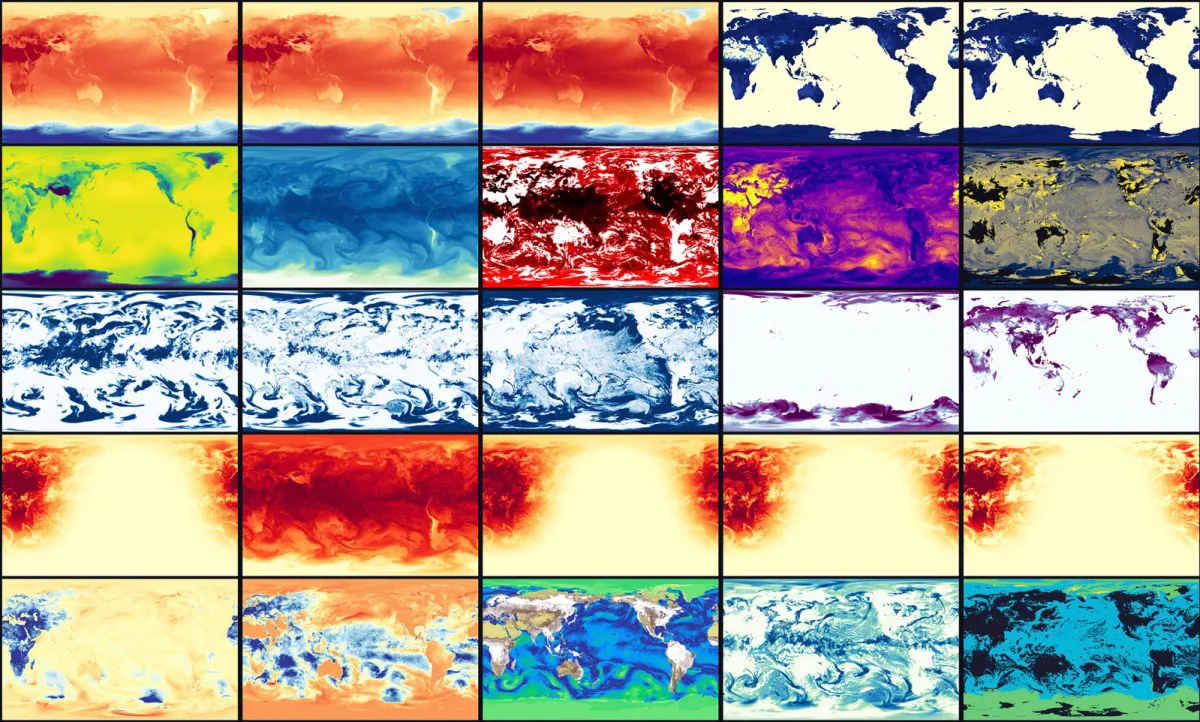
In an era where climate unpredictability is becoming the norm, the need for accurate weather predictions has never been more critical. WindBorne Systems, a pioneering startup, is harnessing the power of artificial intelligence (AI) to revolutionize weather forecasting. Recently, the company secured a significant $37 million in Series B funding, positioning itself to expand its reach and enhance its sophisticated forecasting capabilities. By integrating advanced AI techniques with an extensive network of weather balloons, WindBorne is not only improving the accuracy of weather predictions but is also on the cusp of transforming how businesses utilize weather data.
Founded in 2019, WindBorne has made impressive strides in the field of meteorology by developing a unique approach to data collection. Utilizing the world’s longest-flying weather balloons, the startup aims to gather real-time atmospheric data from remote and challenging locations, including the eye of a typhoon. With 600 balloons deployed globally and 20 launch sites, WindBorne is creating a comprehensive dataset that feeds into its proprietary forecasting model. This innovative model, enhanced by AI, allows for accurate weather predictions that were previously only achievable through costly supercomputers.
The Technology Behind WindBorne's Success
At the heart of WindBorne's operations is a combination of affordable weather sensors and sophisticated AI algorithms. The advancements in deep learning technology have made it feasible for WindBorne to run complex weather simulations on standard laptops instead of requiring expensive supercomputers. This democratization of weather forecasting technology is opening doors for private companies to compete in a space that was once dominated by government agencies and large meteorological institutions.
Data Collection and Processing
The weather data collected by WindBorne is referred to as a "planetary nervous system" by CEO John Dean. This proprietary dataset is crucial for creating forecasts that are not only accurate but also timely. By integrating data from government weather agencies worldwide, WindBorne enhances its predictive models, allowing for a more comprehensive understanding of global weather patterns.

Market Landscape and Opportunities for Growth
The recent funding round, co-led by Khosla Ventures and Galvanize, values WindBorne at approximately $250 million. With this capital infusion, the startup aims to expand its commercial offerings, targeting sectors that depend heavily on weather data, such as agriculture, finance, and logistics. The U.S. National Weather Service, the U.S. Air Force, and the U.S. Navy are among WindBorne's primary clients, utilizing the company’s data for various applications, including military operations and environmental monitoring.
Challenges in the Private Sector
Despite the promising potential of AI in weather forecasting, challenges remain. Historically, private companies have struggled to penetrate the weather data market due to the complexities involved in integrating forecasts into business processes. Many startups have attempted to build earth observation satellite networks with limited success, often finding that the value extracted from the data requires established workflows and expertise. WindBorne aims to overcome these hurdles by simplifying access to high-quality forecasts, thereby enabling businesses to make informed decisions based on real-time weather data.
The Shift Towards Commercialization
WindBorne's strategic focus is shifting towards commercial markets that leverage weather data for predictive analytics. Investment funds, in particular, are increasingly interested in using accurate weather forecasts to inform commodity pricing and other market decisions. With AI tools streamlining the data analysis process, the potential for businesses to integrate weather forecasts into their decision-making frameworks is becoming more attainable.

The Role of AI in Forecasting
Saloni Multani, a partner at Galvanize, highlights that the private weather market has been limited by the high costs and complexities traditionally associated with integrating weather forecasts into broader business decision-making. However, with AI-driven models providing more accurate predictions, companies can justify the investment into these technologies. This shift not only enhances the quality of forecasts but also streamlines the connection between weather data and business strategy.
Future Directions for WindBorne
The road ahead for WindBorne involves expanding its customer base and enhancing its technological capabilities. The recent funding will allow the company to invest in upgrading its communication infrastructure, moving from satellite-based systems to a more efficient mesh radio network. This evolution is crucial for the scalability of its operations and the reliability of data transmission, especially for clients operating in remote areas.
Furthermore, as WindBorne continues to refine its forecasting models and improve data accuracy, it is strategically positioned to capture a significant share of the emerging commercial weather data market. The potential applications of this data are vast, ranging from optimizing supply chains to informing agricultural practices and managing disaster response efforts.
Key Takeaways
- WindBorne Systems leverages AI and weather balloons to revolutionize weather forecasting.
- Recent funding of $37 million will facilitate expansion into commercial markets.
- The company’s data is currently used by U.S. government agencies and has potential applications across various industries.
- AI is making it easier to integrate weather forecasts into business decision-making, potentially transforming several sectors.
- WindBorne aims to enhance its communication systems, moving towards a mesh radio network for improved data transmission.
Frequently Asked Questions
What makes WindBorne's data collection approach unique?
WindBorne utilizes a network of long-flying weather balloons to gather atmospheric data from hard-to-reach areas. This approach allows for real-time data collection in locations where traditional weather stations may not be viable. By combining this data with advanced AI algorithms, WindBorne can produce highly accurate weather forecasts, setting it apart from conventional methods.
How does AI enhance weather forecasting?
AI enhances weather forecasting by processing vast amounts of data quickly and accurately, allowing for the generation of sophisticated predictive models. With deep learning techniques, AI can identify patterns and correlations in weather data that may not be immediately apparent to human forecasters. This leads to more reliable forecasts, which are crucial for a variety of sectors, from agriculture to finance.
What industries can benefit from WindBorne's forecasting capabilities?
Numerous industries can benefit from WindBorne's advanced weather forecasting capabilities. Agriculture relies on accurate weather predictions to optimize planting and harvesting schedules. The finance sector can utilize weather data to inform investment strategies related to commodities. Additionally, logistics companies can improve route planning and supply chain management by integrating weather forecasts into their operations.
What are the challenges WindBorne faces as it expands into commercial markets?
As WindBorne expands into commercial markets, it faces challenges related to establishing trust and demonstrating the value of its data to potential clients. Many businesses have historically relied on traditional weather services, making it essential for WindBorne to communicate the advantages of its advanced forecasting capabilities. Additionally, the company must navigate the complex landscape of data integration and ensure that its forecasts can seamlessly fit into existing business workflows.
Comments
Travis Kalanick's Atoms Welcomes Former Uber CFO in Strategic Move
In a significant move for his robotics startup Atoms, Travis Kalanick has appointed former Uber finance chief Gautam Gupta as CFO. This comes on the heels of Atoms securing $1.7 billion in funding, indicating a strong push towards innovation in industrial AI and robotics.

Related articles

Popular in Cloud Computing
- SK Hynix's Historic $26.5 Billion IPO: A New Era for Memory Chips
- Kubernetes and the Future of Desktop Infrastructure: A Paradigm Shift
- Amazon Expands Partnership with Nvidia, Tripling GPU Orders Amid AI Demand Surge
- Elon Musk's Evolving Relationship with Anthropic: A New Era for AI Hosting
- Emerging Rocket Launches: A New Era for Space Exploration