Inside Prentis: The AI Lab Tackling Office Automation with Big Ambitions
Co-founded by tech luminaries Reid Hoffman and Mark Pincus, Prentis aims to revolutionize office workflows through AI. With plans to raise $100 million, this new lab is stepping into a crowded market aiming to automate routine tasks and enhance productivity for businesses.
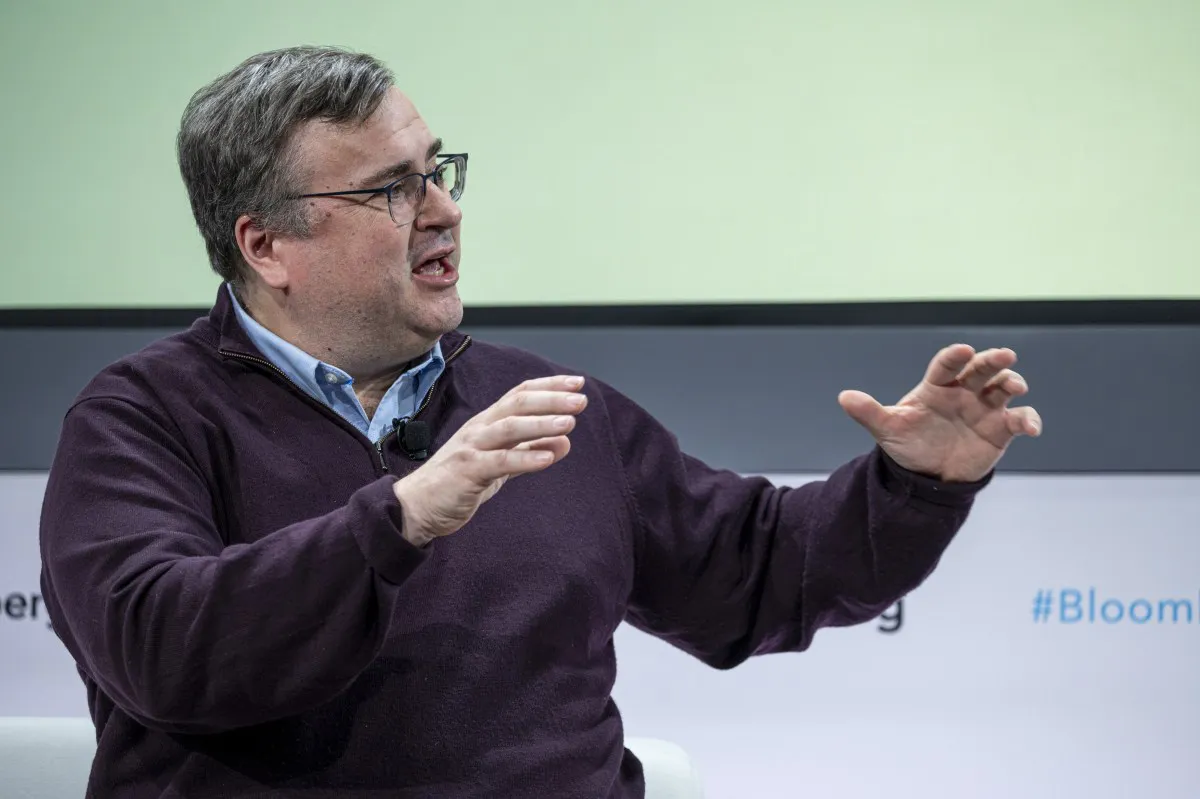
In the rapidly evolving landscape of artificial intelligence, a new player has emerged, poised to disrupt traditional office workflows and operational efficiencies. Prentis, an AI research lab co-founded by notable tech entrepreneurs Reid Hoffman and Mark Pincus, along with CEO Ritankar Das, has ambitious plans to raise $100 million at a valuation of $1 billion. Launched in April 2026, Prentis is focused on developing AI agents capable of automating mundane tasks that occupy valuable time for office workers, such as handling insurance claims and managing customs duty refunds.
As businesses increasingly turn to technology for solutions that enhance productivity and reduce costs, Prentis is positioning itself to capitalize on this demand. With the AI industry projected to expand dramatically in the coming years, the timing of Prentis's entry could not be more fortuitous. The startup is already making strides in the market, having secured contracts worth up to $50 million with various customers, including healthcare organizations and manufacturers, reflecting the growing interest in AI-driven solutions.

Understanding Prentis's Core Focus on Automation
Prentis's primary objective is to create AI agents that streamline the process of navigating office workflows across multiple documents and systems. By training its models to learn how workers interact with these systems, Prentis aims to build solutions that not only reduce the need for human intervention but also enhance overall efficiency. According to sources familiar with the startup’s operations, Prentis has developed its Hive-32B model, which reportedly outperforms competitors like OpenAI's GPT-5.4 and Anthropic's Claude Opus 4.6 in critical benchmarks.
Performance Metrics and Competitive Edge
Prentis claims superior performance on two specific benchmarks: WindowsAgentArena and ScreenSpot-v2. The former measures end-to-end task completion on popular Windows applications, while the latter assesses the model's ability to identify the correct controls on-screen. These benchmarks are essential as they provide potential customers with quantifiable metrics to evaluate the efficacy of Prentis's technology. Moreover, the startup asserts that its operational costs are approximately 10 times lower per task compared to leading AI APIs, making it a more economical choice for businesses seeking to automate repetitive processes.

Market Landscape and Competitive Dynamics
The market for AI-driven office automation is becoming increasingly competitive, with established players like Anthropic and OpenAI actively pursuing similar objectives. These companies are not only advancing their technologies but are also acquiring talent from emerging startups, as seen with Anthropic's recent acquisition of Vercept, another firm focused on computer-use AI. As Prentis enters this crowded field, it will need to differentiate itself further and prove that its models can deliver on their promises.
Given the intense competition, Prentis's ability to demonstrate tangible results will be crucial. Companies that can showcase clear ROI from their AI implementations will likely attract more interest from potential clients. In this context, Prentis's business model, which bases fees on a percentage of savings realized (around 20%), could incentivize businesses to adopt its technology, provided that the savings are substantial.

The Founders Behind Prentis
Ritankar Das, the CEO of Prentis, is a highly accomplished figure in the tech industry, having previously founded Titan, a holding company focused on AI ventures. His impressive academic background includes being UC Berkeley's youngest University Medalist and a Gates Cambridge Scholar. Das's experience in building and operating AI companies positions him well to lead Prentis in a challenging landscape.
Joining him are Reid Hoffman and Mark Pincus, both of whom have made significant contributions to the tech industry. Hoffman, known for co-founding LinkedIn and his role as a partner at Greylock, recently announced his transition into a 'founder mode' to focus on AI startups, including Manas AI. Pincus, the founder of Zynga, is now leading the investment firm Reinvent Capital. Their combined expertise and networks could provide Prentis with valuable resources and connections as it seeks to establish itself in the market.
Future Prospects and Strategic Goals
Prentis's future hinges on its ability to secure the projected $100 million in funding and to maintain its momentum in developing innovative AI solutions. The startup is already in discussions with potential investors, backed by promising early contracts and a focus on delivering measurable outcomes. With an expected annualized run rate of $75 million by Q3 2026, as indicated in its investor materials, Prentis aims to solidify its position as a leader in the office automation space.
However, as the company navigates this journey, it must remain vigilant in addressing the challenges posed by a competitive environment and the evolving needs of its clients. Building a robust product that not only meets but exceeds customer expectations will be essential for Prentis to thrive in the long term. The emphasis on performance-dependent contracts will require the company to deliver consistent results, further emphasizing the importance of effective execution.

Key Takeaways
- Prentis is co-founded by notable tech entrepreneurs Reid Hoffman and Mark Pincus.
- The startup aims to raise $100 million at a $1 billion valuation to fund its AI-driven office automation solutions.
- Prentis claims its Hive-32B model outperforms competitors in key performance metrics.
- With contracts worth up to $50 million already secured, Prentis is positioned for strong market entry.
- The competitive landscape includes major players like OpenAI and Anthropic, highlighting the need for differentiation.
Frequently Asked Questions
What specific tasks does Prentis aim to automate?
Prentis focuses on automating routine office tasks that typically require human intervention, such as processing insurance claims and managing customs duty refunds. By leveraging AI to handle these tasks, the goal is to free up valuable time for employees and enhance productivity across various business functions.
Who are the key figures behind Prentis and what are their backgrounds?
Prentis is co-founded by Ritankar Das, Reid Hoffman, and Mark Pincus. Ritankar Das has a strong background in AI and entrepreneurship, having founded Titan, a holding company for AI ventures. Reid Hoffman is a prominent tech investor and co-founder of LinkedIn, while Mark Pincus is the founder of Zynga and an experienced venture capital investor. Their diverse expertise contributes significantly to Prentis's strategic direction.
What challenges does Prentis face in the current market?
Prentis operates in a highly competitive environment, with established players like OpenAI and Anthropic also focusing on office automation solutions. The challenge for Prentis will be to differentiate itself through unique offerings and to demonstrate measurable results that highlight the effectiveness of its AI models. Additionally, maintaining a focus on performance-driven contracts will be crucial for building trust with clients and achieving long-term success.
Comments
Anthropic's Opus 5: A Game-Changer in AI Model Development
Anthropic has unveiled Opus 5, an advanced AI model that promises better performance and fewer restrictions compared to its predecessor, Fable 5. This article explores its features, implications for users, and what it means for the AI landscape.

Related articles


Popular in AI Tools
- OpenAI's GPT-Live: Transforming Voice Interaction with AI
- SpaceX's Grok 4.5: Disruption in AI Coding at Unmatched Prices
- Gaming Data: The Future of Training AI for General Intelligence
- OpenAI's GPT-5.6: A New Era for Microsoft Copilot and Beyond
- The AI Deployment Dilemma: Balancing Autonomy and Governance