The Next Frontier: How Robotics is Poised for a ChatGPT Revolution
As robotics approaches a pivotal shift akin to the rise of generative AI, startups like General Intuition are pioneering foundation models that could redefine the industry. This article explores the implications of this transformation.

In the same way that OpenAI's GPT-3 and its successors revolutionized natural language processing by enabling businesses to leverage pre-trained models, a similar shift is beginning to unfold in the realm of robotics. This pivotal moment is being spearheaded by innovative startups like General Intuition, which is advocating for a new paradigm in the development of robotic intelligence. Pim de Witte, the CEO of General Intuition, suggests that the robotics industry is primed for a transformation that will allow for more efficient, generalized models capable of learning from fewer data inputs.
Currently, the robotics field is heavily dependent on specialized models that require extensive, tailored training on vast datasets collected from real-world environments. This approach is not only time-consuming but also limits the scalability of robotic applications. De Witte argues that a shift towards foundation models—akin to what has been seen in the AI language space—will streamline this process, enabling robots to learn and adapt more rapidly across various tasks and environments.
The Emergence of Foundation Models in Robotics
The concept of foundation models revolves around the idea of creating a generalized algorithm that can be fine-tuned for specific tasks without the need for exhaustive training data. De Witte emphasizes that the robotics sector is currently burdened by the collection of massive datasets, which often leads to redundancy and inefficiency. Instead, he advocates for high-quality datasets that can impart a foundational understanding of movement and interaction.
General Intuition's Approach
General Intuition has made significant strides in this direction by developing its own foundation model trained on millions of hours of video game data. This innovative approach includes detailed records of user interactions with controllers, allowing the model to grasp the nuances of spatial-temporal reasoning. The implications of this technique are profound; rather than relying on hundreds of thousands of hours of real-world data, the company has demonstrated that only a few minutes of fine-tuning can yield impressive results.
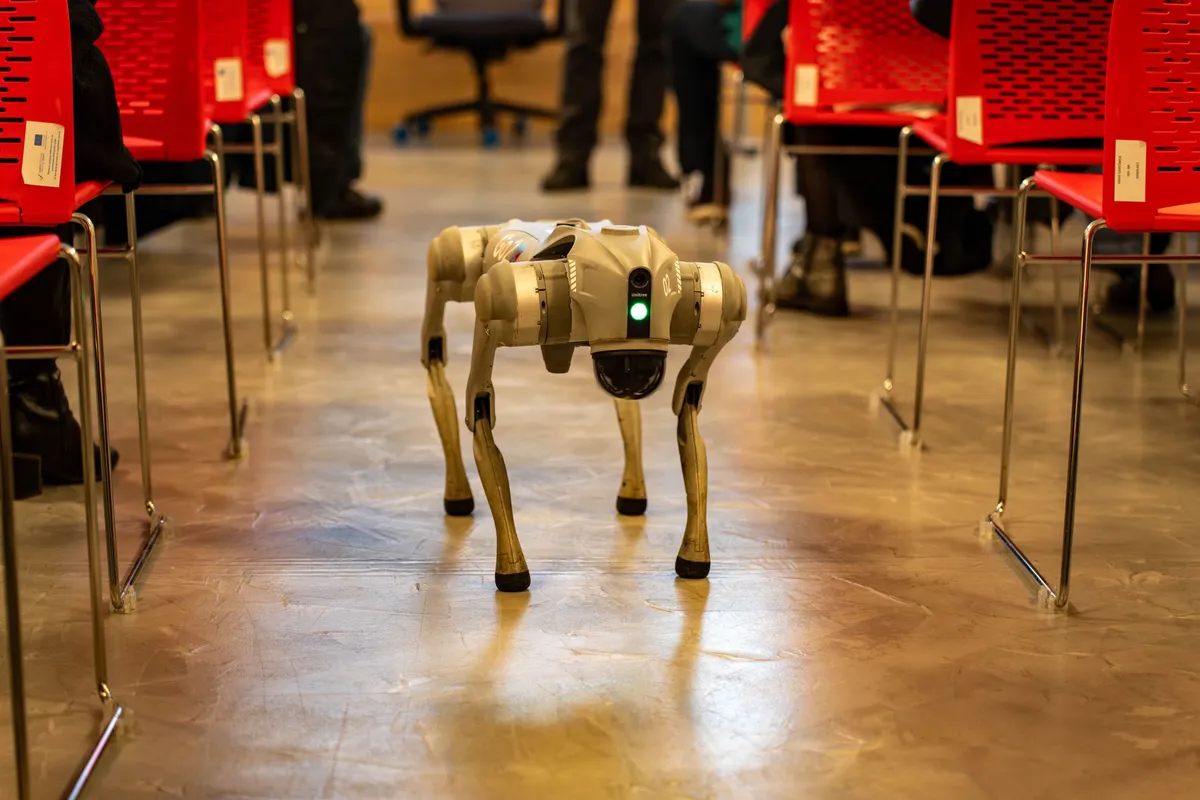
- Training Efficiency: General Intuition's model has shown the ability to power a quadrupedal robot after only eight minutes of real-world data.
- Zero-shot Learning: The model exhibited the capability to operate in dynamic environments with minimal sensor input, a feat that surprised even its creators.
- Investment and Valuation: The startup recently raised $320 million, achieving a valuation of $2.3 billion, underscoring investor confidence in its vision.
What This Means for the Robotics Industry
The implications of General Intuition's approach extend far beyond its own operations. Rather than positioning itself as a robotic manufacturer, the company aims to serve as a foundational model for other robotics firms. This strategic vision is critical; by simplifying the development process for other companies, General Intuition is fostering an ecosystem where innovation can flourish.
Shifting the Paradigm
The transition to foundation models in robotics could lead to a significant reduction in the time and resources needed for the development of new robotic applications. With fewer data requirements and the ability to generalize learning, startups and established companies alike will be able to focus on refining their technologies rather than gathering extensive datasets. This shift could democratize access to advanced robotics, allowing smaller firms to compete with industry giants.
Challenges and Considerations
While the promise of foundation models is enticing, there are challenges that must be addressed for this approach to become mainstream. One such challenge is the need for diverse datasets that accurately reflect the range of environments and tasks that robots will encounter. A foundation model trained on a limited dataset may lack the robustness needed to perform well in the real world.
Ethical Implications
As with any technological advancement, ethical considerations must also be taken into account. The deployment of advanced robotics powered by foundation models raises questions about job displacement, privacy, and the potential misuse of technology. Stakeholders across industries must engage in discussions about the responsible development and deployment of these technologies.

Key Takeaways
- General Intuition is pioneering foundation models for robotics, similar to AI language models.
- The startup has demonstrated the potential for significant efficiency gains in robot training.
- This shift could democratize access to advanced robotics, enabling smaller firms to innovate.
- Ethical considerations are paramount as the industry evolves.

Frequently Asked Questions
What are foundation models, and how do they apply to robotics?
Foundation models are large-scale algorithms that can be fine-tuned for specific tasks with minimal data input. In robotics, this means creating generalized models that can learn from a smaller set of high-quality data, reducing the need for extensive, task-specific training datasets. This approach allows robotics companies to innovate faster and more efficiently.
What are the potential benefits of using a foundation model in robotics?
Using a foundation model can significantly reduce the time and resources required for training robots. Companies can leverage existing models that understand complex spatial-temporal patterns, enabling them to focus on building applications rather than gathering vast amounts of data. This could lead to faster product development cycles and more agile responses to market demands.
How might foundation models impact the job market?
The introduction of advanced robotics powered by foundation models could lead to job displacement in certain sectors, particularly in routine manual labor roles. However, it may also create new opportunities in tech development, robotics maintenance, and AI ethics. The net effect will depend on how companies and governments manage the transition and invest in workforce retraining.
What ethical considerations should be taken into account with this technology?
As with any rapidly advancing technology, ethical considerations are crucial. Issues such as privacy, job displacement, and the potential for misuse of robotics must be addressed. Stakeholders, including policymakers, industry leaders, and the public, should engage in ongoing dialogue to ensure that the development and deployment of robotics are carried out responsibly and ethically.
Comments
Google Enhances Android Bench: A Look at LLM Performance in App Development
Google's Android Bench is evolving with new models and a user-friendly framework, but its Gemini AI still struggles against competitors. This article explores the implications for developers and the future of AI in software development.

Related articles


Popular in Developer Tools
- Why Greylock Partners Caps Fund Size in a Growing Industry
- Roblox Unleashes AI-Powered Game Creation for Mobile Users
- DeepSeek Launches Open Source Alternative to Claude Code, Ups API Pricing
- Cursor Launches Origin: A New Challenger to GitHub's Dominance
- Apple's Camera-Equipped AirPods: Innovation or Invasion?