Agility Robotics Expands in Tesla's Territory: A New Era for Humanoid Tech
Agility Robotics is opening a significant new facility in Fremont, California, positioning itself as a leader in the humanoid robotics space amid rising competition from Tesla's Optimus project. The company aims to enhance its robot, Digit, which is already operational in various commercial sectors.
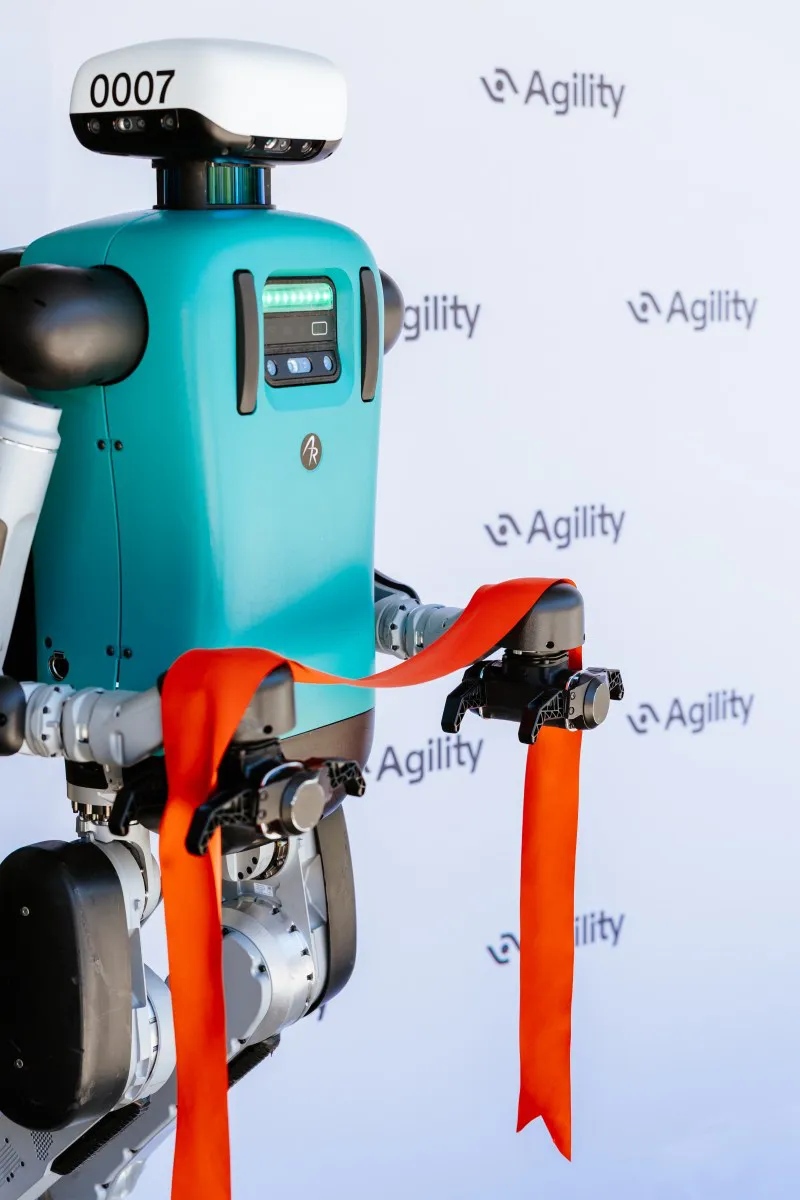
In a bold move that underscores the growing significance of humanoid robotics, Agility Robotics has announced the opening of a 60,000-square-foot facility in Fremont, California. This strategic location places Agility just a stone's throw away from Tesla's factory, where the electric vehicle giant is expected to commence manufacturing its highly anticipated Optimus robots. As Elon Musk has touted the Optimus as potentially 'the biggest product ever' for Tesla, Agility's expansion marks a crucial step in the race to dominate the humanoid robotics market.
Agility's flagship robot, Digit, is not just a prototype; it's a revenue-generating asset already in use across various industries, including manufacturing and logistics. With contracts secured amounting to an impressive $300 million, Agility is not merely keeping pace with Tesla; it is carving its niche in a sector poised for explosive growth.
The Humanoid Robotics Landscape
The field of humanoid robots has seen a surge in interest and investment in recent years, with companies like Agility Robotics and Tesla vying for dominance. Founded in 2015, Agility Robotics emerged from research aimed at developing robots capable of walking on two legs, a feat that is both technically challenging and commercially valuable. According to CEO Peggy Johnson, the presence of Tesla in the same region fosters a sense of community and competition, which Agility welcomes. "It's great to have [Tesla] in the same area as us... we have commercialized," she stated.
While Tesla's ambitious plans for Optimus are well-publicized, Agility's approach is grounded in practical applications. The company has already deployed dozens of Digit units in real-world environments, demonstrating their functionality through significant achievements, such as moving over 100,000 totes at a logistics facility for GXO. This track record positions Agility as a formidable player, particularly as they prepare for a reverse merger that will make them the first pure-play humanoid robotics company on the public market.
Technological Innovations and Safety Considerations
One of the critical challenges in developing humanoid robots is ensuring their safety, especially when operating in environments that may involve human interaction. Agility Robotics emphasizes a cautious approach to autonomy, with co-founder Damion Shelton highlighting the importance of maintaining safety mechanisms that do not rely on generative AI. "You don’t want to get creative with your safety stack," he warned, underscoring a commitment to prioritizing operational safety over cutting-edge AI capabilities.
Agility's ongoing development of Digit includes advancements to enable the robot to sense and interact with humans safely. The upcoming Version 5, expected to launch this fall, will introduce capabilities that allow Digit to function alongside people, moving beyond the confines of human-free zones. This evolution is essential for wider adoption, particularly in sectors where human-robot collaboration is beneficial.
Market Dynamics and Competitors
As Agility Robotics continues to establish itself, it faces competition not only from Tesla but also from a burgeoning number of startups in the robotic space, including Figure, 1X, and Sunday Robotics. While these newcomers leverage advanced AI for robotic behavior, Agility's focus remains on practical applications within manufacturing and logistics.
Industry analysts predict that the demand for humanoid robots will only increase as automation becomes more prevalent across sectors. According to reports, the global robotics market is projected to reach $500 billion by 2030, with logistics and manufacturing leading the demand. Agility's strategy seems well-timed to capture a significant share of this market, particularly given their existing relationships with major clients like Amazon and Toyota Motor Manufacturing Canada.
Future Prospects and Strategic Goals
Agility's future appears bright as it ramps up its operations in Fremont. With over 30 potential customers currently in discussions to deploy Digit, the new facility will serve as a crucial hub for training and innovation. The company aims to expand Digit's capabilities further, focusing on skills such as picking, kitting, and even handling complex materials like cardboard.
Co-founder Jonathan Hurst envisions a future where the scale of deployment could reach astronomical levels: "Let’s start with the bins and the totes, and then let’s do the picking and the kitting... Okay, now we’re at 100 million robots, you know? A trillion-dollar company." Such projections highlight the optimism within Agility for substantial growth and market penetration as they refine their technology.
Key Takeaways
- Agility Robotics has opened a new facility in Fremont, California, to enhance its humanoid robot training.
- The company's robot, Digit, is already operational in several industries, generating significant revenue.
- Safety and practical applications are at the forefront of Agility's development strategy, distinguishing it from competitors.
- Growing demand for humanoid robots in logistics and manufacturing presents substantial market opportunities.
- Agility is on track to become the first public humanoid robotics company through a reverse merger.
Frequently Asked Questions
What are the primary applications of Agility Robotics' Digit?
Digit is primarily utilized in manufacturing and logistics environments, where it assists in transporting goods such as totes and bins. Its current deployments include working alongside major companies like Amazon and Toyota, showcasing its practical utility in real-world scenarios.
How does Agility Robotics ensure the safety of its humanoid robots?
Agility Robotics prioritizes safety by maintaining a robust safety framework that does not rely on generative AI. The company is cautious about how autonomy is implemented, ensuring all safety mechanisms are effective and reliable. The upcoming Version 5 of Digit will enhance its ability to sense and interact with humans safely, expanding its operational capabilities.
What competitive landscape does Agility Robotics face?
Agility Robotics operates in a competitive landscape that includes heavyweights like Tesla as well as numerous startups such as Figure and 1X. While these competitors may focus on cutting-edge AI applications, Agility differentiates itself through a focus on practical, revenue-generating applications in industries like manufacturing and logistics.
What future developments can we expect from Agility Robotics?
Looking ahead, Agility Robotics plans to continue expanding Digit's capabilities, focusing on complex tasks such as picking and kitting. With ongoing discussions with over 30 potential customers, the company is positioned for significant growth. The new facility in Fremont will play a pivotal role in training and deploying these advanced robotic systems.
Comments
Join the Team: Ars Technica Seeks Senior Technology Reporter
Ars Technica is on the hunt for a senior technology reporter. This role offers the chance to engage deeply with tech topics like CPUs, GPUs, and self-hosting.

Related articles
Popular in Developer Tools
- Why Greylock Partners Caps Fund Size in a Growing Industry
- Roblox Unleashes AI-Powered Game Creation for Mobile Users
- DeepSeek Launches Open Source Alternative to Claude Code, Ups API Pricing
- Cursor Launches Origin: A New Challenger to GitHub's Dominance
- Apple's Camera-Equipped AirPods: Innovation or Invasion?