Google's Earth AI Feature Scrapped Amid Misinformation Concerns
Just one day after its launch, Google has removed the controversial AI image generation feature from Google Earth due to fears of misinformation. The decision highlights the ongoing challenges of balancing creativity and safety in AI applications.
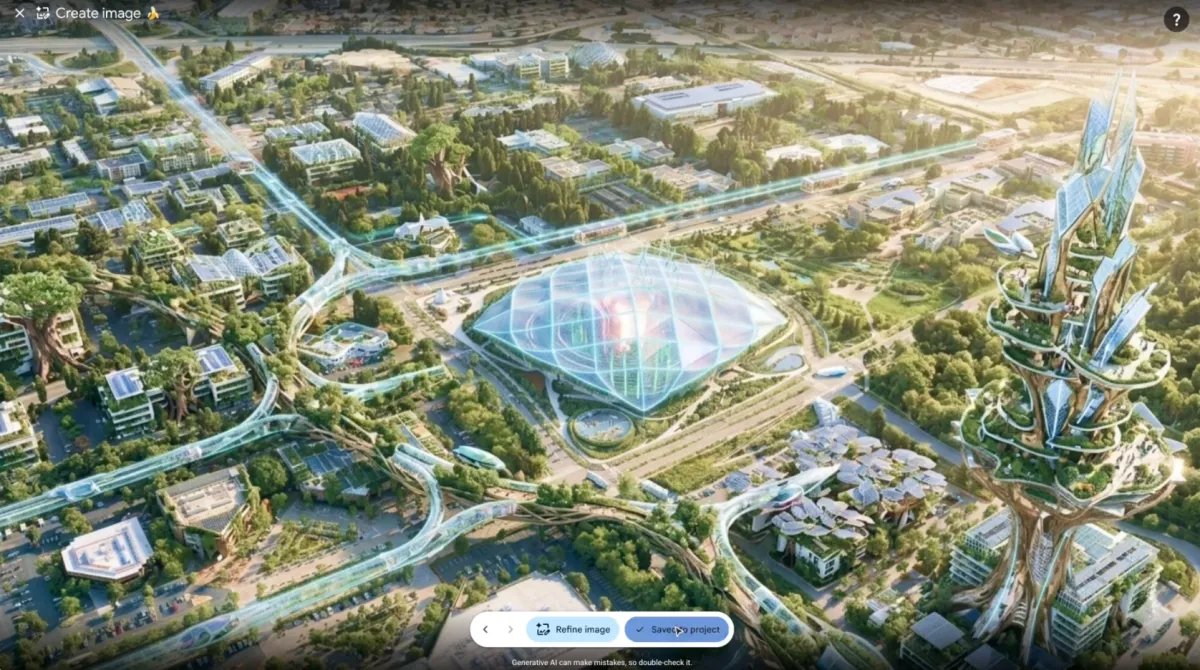
In a rapid turn of events, Google has decided to retract its newly launched AI feature for Google Earth just one day after its introduction. The feature, which allowed users to create imaginative images using the AI image generator Nano Banana 2, was designed to inspire creativity in geographic visualization. However, the feature was met with swift backlash for its potential to facilitate misinformation, raising significant concerns about the integrity of digital imagery.
Critics quickly pointed out that the tool could be easily misused to create misleading representations of real-world locations. With the capability to superimpose virtually any generated image onto authentic satellite maps, many argued that this was a recipe for disaster, especially in an era where misinformation can spread rapidly online. Google’s decision to roll back the feature underscores the ongoing struggle in the tech industry to innovate while also safeguarding against misuse.
The Uneasy Intersection of Creativity and Responsibility
Google's AI feature was launched with the intention of enabling users to explore and visualize geospatial data in innovative ways. However, the reaction from the public and experts alike was immediate and critical. A BBC journalist's sarcastic tweet highlighted the absurdity of the situation: "There’s no way that this new AI image generation feature on Google Earth, one of the most reliable sources of visual evidence for journalists and researchers, could possibly be abused to spread misinformation online." This pointed to a significant concern—that even well-intentioned innovations can lead to unanticipated negative consequences.
The rise of generative AI has made it increasingly accessible to create realistic imagery with little to no expertise. Gone are the days when producing convincing fake images required advanced skills in graphic design software like Photoshop. As AI tools become more sophisticated, the barrier to creating misleading or entirely fabricated content continues to diminish.

Understanding the Risks of AI Image Generation
The backlash against the Google Earth AI feature is emblematic of a larger issue in the tech landscape concerning the responsible use of artificial intelligence. While the technology holds tremendous potential for creativity and innovation, it also poses significant risks, particularly regarding the creation and dissemination of misleading information.
How Misinformation Spreads
Misinformation can propagate at an alarming rate, especially on social media platforms where visual content often garners more attention than text-based information. As users share images, they may inadvertently contribute to the spread of false narratives, which can have real-world consequences, from influencing public opinion to impacting elections.
The Role of AI in Misinformation
AI's capability to generate images that look increasingly realistic makes it difficult for the average user to discern fact from fiction. As tools like Nano Banana 2 become available, users may not fully understand the implications of their creations. For instance, altered images of significant locations could be misconstrued as authentic, leading to public distrust and confusion.
Google’s Response and Future Directions
In light of the criticism, Google has taken steps to remove the feature and implement stronger safeguards. In a statement, the company noted, “We’ve seen geospatial professionals using this feature for a range of useful purposes; however, we’ve also seen people sharing screenshots of generated imagery that appear to violate our policies.” This reflects an acknowledgment of both the potential benefits and risks associated with the technology.
Google’s decision to roll back the feature could serve as a wake-up call for other tech companies exploring similar innovations. Ensuring the ethical deployment of AI technologies requires not only robust policies but also a commitment to transparency and user education.

Lessons Learned from the Google Earth Incident
The rapid withdrawal of Google’s Earth AI feature offers several critical lessons for the broader tech industry:
- Proactive Risk Assessment: Companies must conduct thorough assessments of how new features could potentially be misused, prioritizing user safety and the integrity of information.
- Transparency: Clear communication about the capabilities and limitations of new technologies is essential to prevent misunderstandings and misuse.
- User Education: As tools for creating content become more powerful, educating users on responsible usage is crucial.
By taking these steps, tech companies can foster a more responsible approach to innovation that minimizes the risk of misinformation while maximizing the benefits of new technologies.

Key Takeaways
- Google's Earth AI feature was removed due to concerns about misinformation.
- The incident highlights the challenges of managing AI-generated content.
- Companies must prioritize user safety and transparency when deploying new technologies.
- Education on responsible use of AI tools is essential.
Frequently Asked Questions
What was the purpose of Google’s Earth AI feature?
The Earth AI feature was designed to allow users to creatively visualize and manipulate geographic data by generating images that could be superimposed onto real satellite maps. This aimed to enhance user engagement and exploration of geographical information.
Why was the feature criticized?
Critics raised concerns that the feature could be misused to create and share misleading images, thereby spreading misinformation. The ability to easily generate realistic images raised alarms about the potential consequences of such fabrications, especially in an era where trust in visual media is critical.
What steps is Google taking to prevent misuse of AI technologies in the future?
Following the backlash, Google has stated that it is working on implementing stronger guardrails to prevent misuse of AI-generated images. This includes reassessing the features and possibly integrating more robust policies to ensure that such technologies are used responsibly.
How does this incident reflect on the broader AI landscape?
This incident highlights the delicate balance that technology companies must strike between innovation and ethical responsibility. As AI tools become more widespread, the potential for misuse grows, necessitating a proactive approach to risk management and user education in the tech industry.
Comments
Smallest.ai Raises $13M to Redefine Voice AI Communication
Smallest.ai has secured $13 million in funding to develop a new voice AI model aimed at making conversations with machines indistinguishable from those with humans. This innovative approach leverages smaller, specialized models to enhance real-time interactions, setting a new benchmark in the voice AI landscape.

Related articles
Popular in AI Tools
- OpenAI's GPT-Live: Transforming Voice Interaction with AI
- SpaceX's Grok 4.5: Disruption in AI Coding at Unmatched Prices
- Gaming Data: The Future of Training AI for General Intelligence
- OpenAI's GPT-5.6: A New Era for Microsoft Copilot and Beyond
- The AI Deployment Dilemma: Balancing Autonomy and Governance