IBM Launches Granite 4.2: A New Era for Local AI Models
IBM's Granite 4.2 models introduce robust local LLMs designed for enterprise deployment, focusing on reasoning capabilities and agentic functionality. Explore the implications of this technology for businesses and developers.
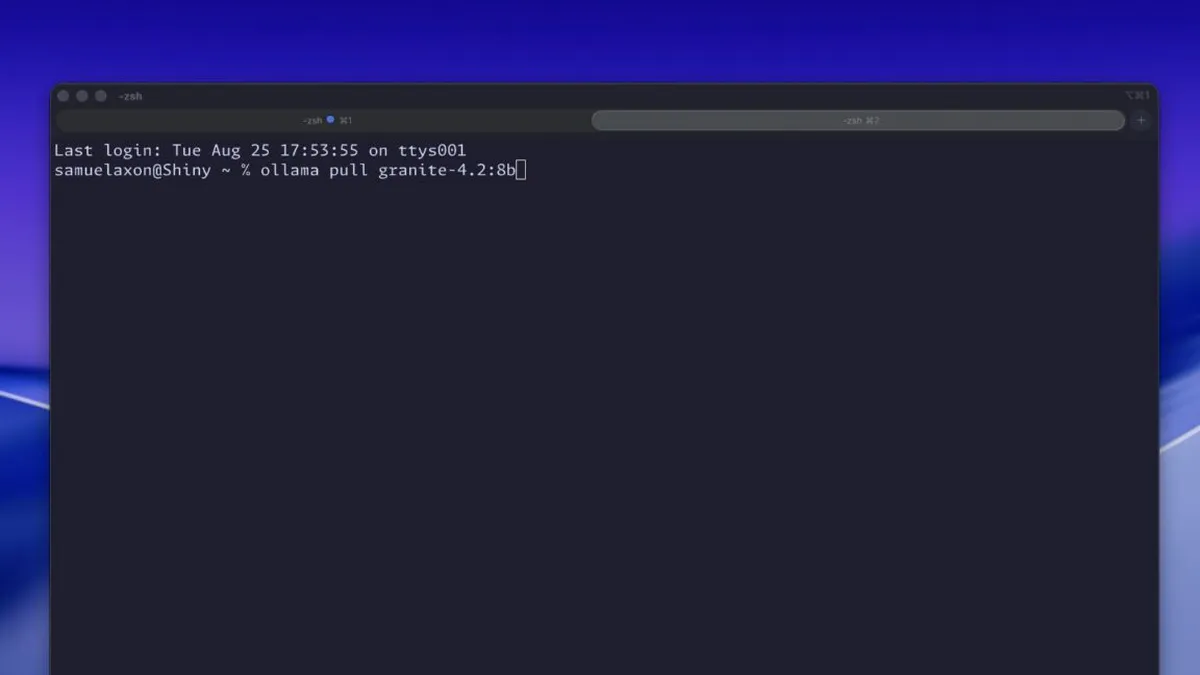
In a notable advancement for enterprise AI, IBM has unveiled its Granite 4.2 models, which exemplify the growing interest in local large language models (LLMs). With the recent surge in demand for AI technologies that can be deployed on-premises, these models are positioned to offer businesses the flexibility and performance they need without the ongoing costs associated with cloud-based services. The release of Granite 4.2, available in 3B, 8B, and 30B parameter variants, is a significant step forward for organizations looking to harness the power of AI while maintaining control over their data and computing resources.
The Granite 4.2 models are characterized by their decoder-only architecture, which allows for efficient processing of text inputs. A standout feature of these new models is their expansive context window of 128,000 tokens, enabling them to handle complex queries and maintain coherence over long interactions. This capability is particularly beneficial for enterprises that require deep analysis and extended dialogues, such as customer support systems or detailed report generation.
Understanding the Reasoning Capabilities of Granite 4.2
One of the most compelling aspects of the Granite 4.2 models is their emphasis on reasoning capabilities. However, it's important to clarify what is meant by "reasoning" in the context of AI. Unlike human reasoning, which involves conscious thought and emotional intelligence, the reasoning capabilities of these models are functional. They employ techniques such as “chain-of-thought,” which allows them to carry intermediate results through multiple steps of logic to arrive at a conclusion.
The Impact on Response Accuracy
This functional approach to reasoning means that while users can expect more rigorous and accurate responses in many cases, they might also experience slower response times and increased computational demands. Businesses must weigh these trade-offs when considering the deployment of these models. The 3B variant supports basic tool usage but lacks the extensive training of its larger counterparts, the 8B and 30B models, which are equipped with specialized training for tasks such as web searching and terminal operations.

The Growing Trend of Local LLMs
The rise of local LLMs like those in the Granite family reflects a broader shift in the AI landscape, particularly as many organizations seek to move away from dependency on cloud-based models that can incur significant ongoing costs. The current discourse surrounding the compute crunch associated with frontier cloud models from companies such as OpenAI and Anthropic has prompted many developers and enterprises to explore alternative solutions.
Local models provide a viable path, offering the advantages of lower operational costs and greater control over data privacy. Developers, researchers, and enterprises can experiment with these models on local hardware, eliminating the need for per-token API fees that can quickly accumulate in cloud environments. This democratization of AI technology enables smaller organizations and individual developers to leverage powerful tools without prohibitive expenses.
Agentic Capabilities and Business Applications
Another exciting feature of the Granite 4.2 models is their agentic capabilities, particularly present in the 8B and 30B variants. These models have undergone reinforcement learning, which enhances their ability to perform complex tasks autonomously. For enterprises, this means that these models can be deployed in scenarios requiring a high degree of automation, such as customer service bots or virtual assistants that can execute commands, search for information, and interact with other tools seamlessly.
As businesses increasingly look for ways to automate processes and improve efficiency, the demand for AI tools capable of functioning autonomously is on the rise. The ability of the Granite models to integrate with existing workflows and systems makes them particularly appealing for organizations aiming to enhance operational efficiency.

The Role of Model Routers in AI Deployment
As organizations integrate local models like Granite 4.2 into their tech stacks, the use of model routers is becoming increasingly important. These tools serve as intermediaries, interpreting user prompts and routing tasks to appropriately scoped models based on performance, speed, and cost considerations.
Model routers allow organizations to optimize their AI deployments, ensuring that the right model is used for each task. This is crucial in environments where rapid responses are needed, as it balances the need for accuracy with the constraints of computational resources. The ability to switch between models dynamically can significantly enhance the overall effectiveness of AI applications.
- Cost-Effective Solutions: Local models reduce reliance on costly cloud services.
- Enhanced Control: Businesses maintain data privacy and security by hosting models locally.
- Automation Opportunities: Agentic capabilities allow for more autonomous and efficient workflows.
- Flexible Deployment: Model routers facilitate optimized use of multiple models.

Key Takeaways
- IBM's Granite 4.2 models provide businesses with powerful local AI options.
- The models feature enhanced reasoning capabilities for more accurate responses.
- Local deployment reduces costs and increases data control.
- Agentic capabilities enable greater automation in enterprise applications.
- Model routers optimize the use of local models for various tasks.
Frequently Asked Questions
What are local language models, and why are they significant?
Local language models are AI models that can be downloaded and run on local hardware instead of relying on cloud-based services. This is significant for businesses seeking to control costs, protect sensitive data, and customize AI solutions according to specific needs. The ability to host models locally allows for greater flexibility and adaptability in various applications, from customer service to data analysis.
How do reasoning capabilities in AI models work?
Reasoning capabilities in AI models refer to their ability to process information and arrive at conclusions based on logical steps. In models like Granite 4.2, this is achieved through techniques such as chain-of-thought, which allows the model to maintain context and carry intermediate results through multiple steps. While this enhances accuracy, it may also increase response times and computational requirements.
What advantages do agentic capabilities provide for businesses?
Agentic capabilities allow AI models to perform complex tasks autonomously, enhancing efficiency in business operations. For instance, these capabilities enable virtual assistants to execute commands, interact with other tools, and manage tasks without human intervention. This can lead to significant time savings and improved productivity, as organizations can automate repetitive tasks and focus on higher-value work.
How can organizations effectively deploy local models like Granite 4.2?
Organizations looking to deploy local models should consider their specific needs, including cost, data security, and application requirements. Implementing model routers can facilitate the effective use of multiple models, optimizing performance and balancing costs. Additionally, training staff on how to leverage these models and integrating them into existing workflows will be crucial to maximizing their potential and ensuring successful deployment.
Comments
Understanding OpenAI's Executive Exodus: Implications and Future Outlook
OpenAI faces a significant executive turnover amid ambitious growth plans and an impending IPO. This article delves into the reasons behind this exodus and what it means for the AI pioneer.

Related articles
Popular in AI Tools
- OpenAI's GPT-Live: Transforming Voice Interaction with AI
- SpaceX's Grok 4.5: Disruption in AI Coding at Unmatched Prices
- Gaming Data: The Future of Training AI for General Intelligence
- OpenAI's GPT-5.6: A New Era for Microsoft Copilot and Beyond
- The AI Deployment Dilemma: Balancing Autonomy and Governance