Transforming AI Training: How Arga Labs is Redefining Agentic Systems
Arga Labs is pioneering a new approach to train AI agents for enterprise applications, addressing the complexities that traditional methods struggle to handle. With a recent $10 million seed funding, they aim to enhance how AI interacts with business software, promising significant advancements in efficiency and accuracy.

As artificial intelligence continues to permeate various sectors, the challenge of effectively training AI agents for enterprise applications has become increasingly apparent. Many organizations have faced unexpected obstacles when attempting to deploy AI solutions capable of navigating the complexities of modern business environments. Enter Arga Labs, a startup that aims to transform how these agents are trained by creating realistic training environments that mirror actual enterprise software. With a recent $10 million seed funding round led by General Catalyst, Arga Labs is poised to make significant strides in improving the performance and utility of AI agents in enterprise settings.
The company’s innovative approach involves constructing comprehensive digital twins of enterprise software applications, such as Salesforce and Workday. Unlike typical testing environments that rely on simplistic API endpoints, Arga Labs replicates the entire operational structure of these applications, including permission systems and web hooks. This unique capability allows for a more nuanced and effective training process for AI agents, ultimately leading to enhanced performance in real-world scenarios.
The Need for Better AI Training Solutions
AI has shown remarkable potential in automating tasks, improving decision-making, and enhancing productivity across various industries. However, the effectiveness of AI agents hinges on their training methodologies. Traditional approaches often fall short, particularly in enterprise environments where the interplay between different applications can be intricate and dynamic.
Challenges in Enterprise AI Training
One of the most significant hurdles faced by organizations is the lack of flexibility in conventional training environments. For instance, when training an AI agent to recognize leads across platforms like Salesforce and HubSpot, the agent may need to process multiple overlapping pieces of information. Arga Labs’ CEO, Philip Li, highlights this complexity, stating, "Can the agent correctly identify that these two are the same company? Are they able to check whether or not they’ve only sent the email once?" The ambiguity inherent in these tasks poses a challenge that many AI systems struggle to overcome.
Reinforcement Learning Limitations
Typically, AI agents are trained using reinforcement learning (RL), a method that involves running numerous scenarios to identify successful strategies. However, in enterprise settings, the inability to easily reset or clone complex software systems like Salesforce or Outlook limits the feasibility of this approach. Arga Labs addresses this limitation by offering a complete digital recreation of enterprise software, allowing for easy modifications and resets, thus facilitating more effective training.

Arga Labs’ Innovative Approach
What sets Arga Labs apart is its commitment to creating a realistic training environment that replicates the full complexity of a user’s work ecosystem. By developing a digital twin of enterprise software, the company can simulate various scenarios where AI agents must navigate between different applications and knowledge systems. This comprehensive training model aims to bridge the gap between coding environments, where sophisticated tools are readily available, and the more challenging landscape of business software.
The Role of Digital Twins
The use of digital twins in AI training offers several advantages:
- Realism: Agents are trained in environments that closely mimic actual user experiences.
- Control: Trainers can easily reset or adjust scenarios to optimize learning outcomes.
- Scalability: Multiple environments can be run concurrently, allowing for extensive training on complex interactions.
- Holistic Learning: Agents learn to manage tasks that overlap across different applications, improving their overall proficiency.
Impact on Future AI Development
By providing a platform for more nuanced training, Arga Labs is not only aiming to enhance the capabilities of AI agents but also to revolutionize how businesses leverage AI across their operations. General Catalyst’s managing director, Yuri Sagalov, emphasizes the importance of repeatable sandbox environments for agentic testing, stating that such tools are becoming increasingly essential as organizations seek to maximize the economic value of AI in business applications.
Market Implications and Future Prospects
The implications of Arga Labs’ technology extend beyond immediate training solutions. As AI agents become more adept at navigating complex enterprise systems, we can expect a transformation in how businesses operate. With better-trained AI, organizations could see enhancements in:
- Efficiency: Streamlined processes and reduced operational costs.
- Decision-making: Improved accuracy and speed in identifying opportunities and challenges.
- Integration: Seamless collaboration across various software platforms.
Moreover, as AI continues to evolve, the demand for sophisticated training solutions like those offered by Arga Labs will likely grow. Companies that invest in robust AI training tools will position themselves to lead in the competitive landscape, harnessing the full potential of artificial intelligence.

Key Takeaways
- Arga Labs is redefining AI training for enterprise applications through digital twins.
- The company’s approach addresses the limitations of traditional AI training methodologies.
- Enhanced AI agents can lead to significant efficiency and decision-making improvements in businesses.
- The market demand for sophisticated AI training tools is expected to rise as AI capabilities expand.
Frequently Asked Questions
What is a digital twin in the context of AI training?
A digital twin is a virtual replica of a physical entity or system, allowing for real-time simulation and analysis. In the context of AI training, digital twins provide a realistic environment where AI agents can be tested and trained on complex scenarios that mimic real-world applications.
How does Arga Labs differ from traditional AI training solutions?
Unlike traditional solutions that rely on simplified API endpoints for testing, Arga Labs builds comprehensive digital environments that replicate entire enterprise applications. This allows for a more nuanced understanding of how AI agents interact with various software systems, leading to more effective training outcomes.
Why is reinforcement learning challenging in enterprise settings?
Reinforcement learning often requires the ability to reset and modify training scenarios easily. In enterprise settings, complex software systems do not allow for easy resets, making it difficult to run multiple scenarios and gather meaningful data for training AI agents.
What potential impact could enhanced AI agents have on businesses?
With better-trained AI agents, businesses could experience improved efficiency, faster and more accurate decision-making, and enhanced collaboration across software platforms. This could lead to reduced operational costs and a more streamlined workflow across various functions within the organization.
Comments
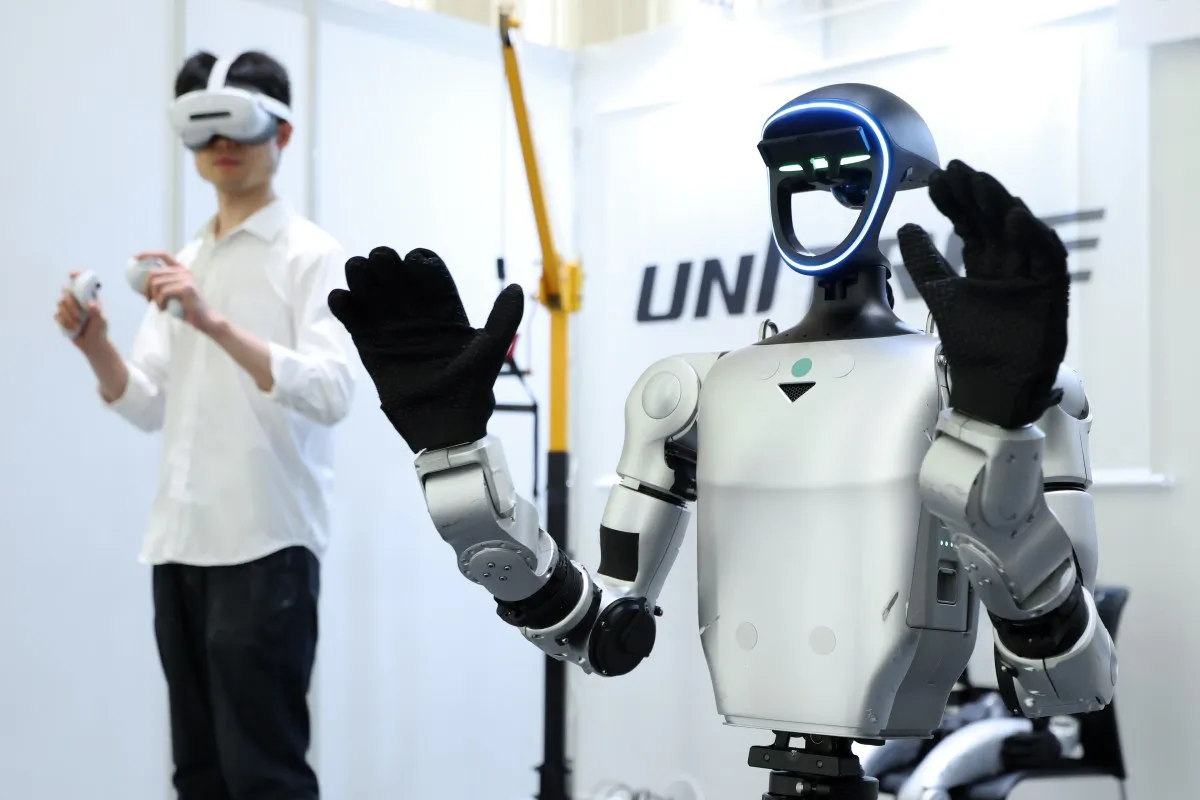
The Evolution of Physical AI: From GPT-2 to Tomorrow's Robotics
As venture capital flows into the physical AI sector, companies face challenges in translating advanced language models into real-world robotics. This article explores the current landscape, key players, and what the future may hold for robotics powered by AI.
Related articles
Popular in AI Tools
- OpenAI's GPT-Live: Transforming Voice Interaction with AI
- SpaceX's Grok 4.5: Disruption in AI Coding at Unmatched Prices
- Gaming Data: The Future of Training AI for General Intelligence
- OpenAI's GPT-5.6: A New Era for Microsoft Copilot and Beyond
- The AI Deployment Dilemma: Balancing Autonomy and Governance