Google's New Tool Helps Publishers Combat AI Traffic Declines
As AI technology reshapes content discovery, Google introduces a 'Preferred Sources' button for publishers, allowing readers to signal their favorite content sources directly. This initiative aims to mitigate the impact of AI-driven traffic losses on online publishers.
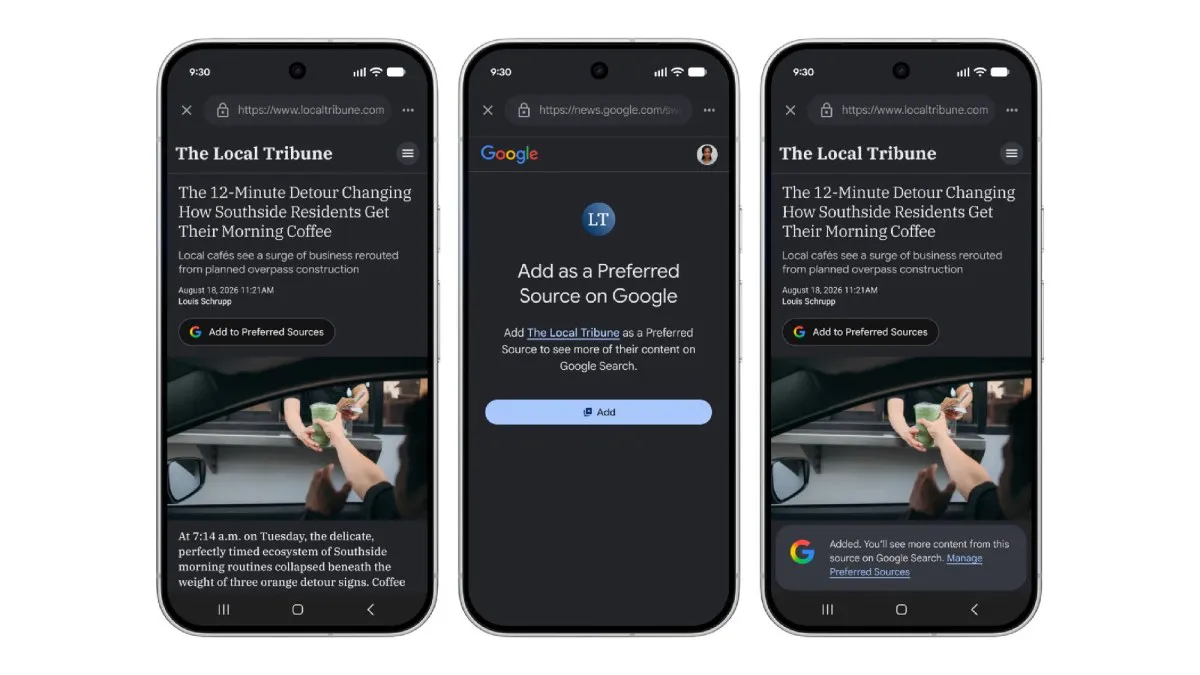
In an era where artificial intelligence (AI) is revolutionizing content discovery and consumption, online publishers are facing unprecedented challenges. The shift towards AI-driven search and recommendation systems has led to significant traffic losses for many publishers, who rely heavily on organic search for their visibility and revenue. Responding to these challenges, Google has rolled out an innovative solution aimed at helping publishers regain their footing. The new 'Preferred Sources' button allows readers to indicate their favorite publishers directly on their websites, giving them a greater chance of being featured across Google’s platforms, including Search, Discover, and Google News.
This development is not just a mere feature; it represents a critical pivot in how audiences interact with content in a landscape increasingly dominated by AI algorithms. By enabling users to actively express their preferences, Google is not only seeking to boost traffic for struggling publishers but also to enhance user experience by connecting readers with the content they trust and value.
Understanding the Impact of AI on Publisher Traffic
The rise of AI technologies, particularly in the realm of search and content curation, has profoundly altered how users discover information online. Traditional search engines have evolved into sophisticated AI-driven platforms that prioritize personalized content delivery. While this has improved user experience in many respects, it has adversely affected countless publishers who depend on search traffic to sustain their operations.
The Role of AI in Content Discovery
AI algorithms analyze vast amounts of data to tailor content recommendations to individual users, often prioritizing popular or trending sources over niche publishers. This has led to a scenario where smaller or less mainstream publishers see a significant drop in traffic as users are directed towards larger, more established sources. Furthermore, many publishers report that their articles are less frequently displayed in top search results, leading to diminished visibility and engagement.
- Traffic Losses: Many publishers have reported up to a 50% drop in traffic due to AI-driven search features.
- Ad Revenue Impact: Reduced traffic often translates to lower ad revenue, threatening the financial viability of many media outlets.
- Content Saturation: The overwhelming volume of content generated by AI can drown out quality journalism from smaller publishers.
Google's introduction of the 'Preferred Sources' initiative is a direct response to these challenges, aiming to level the playing field and ensure that trusted sources are not lost in the noise.

The 'Preferred Sources' Button: A Game Changer for Publishers
Launched as part of a broader effort to refine how content is surfaced in search results, the 'Preferred Sources' button allows readers to actively engage with their favorite publishers. This feature, which can be embedded on publisher websites, enables users to easily mark a site as a preferred source. Once selected, these sites are more likely to appear in users' search results, as well as in Google’s Discover and News feeds.
How It Works
To utilize this feature, readers simply need to visit a publisher's website and click the 'Preferred Sources' button. They can then search for their favorite publishers by name or URL. According to Google, this feature has already seen over 345,000 unique sources selected by users since its initial rollout in May of this year. The impact is substantial; studies have shown that users are twice as likely to click on articles from publishers they have marked as favorites.
Benefits Beyond Traffic
While the primary goal of the 'Preferred Sources' button is to drive traffic back to publishers, it also facilitates a more personalized content consumption experience for users. By allowing readers to curate their own news feeds, Google is not only enhancing user engagement but also fostering a community of trusted content creators. This can lead to stronger relationships between publishers and their audiences, which is essential in an age where trust in media is often questioned.

Enhancing User Customization Across Google Platforms
In addition to the 'Preferred Sources' button, Google is rolling out further customization options for users across its platforms. Readers will soon be able to tailor their Discover feed using natural language commands. By interacting with a simple three-dot menu, users can specify topics they want to see more or less of, allowing Google to refine the content they receive in real time.
Expanded Customization in Google News
Android users will also benefit from this personalization in the Google News app, where they can customize their audio daily briefings. This new level of control not only enhances user satisfaction but also positions Google as a leader in user-centric AI technology. As other social media platforms adopt similar user-controlled algorithms, Google is ensuring it remains at the forefront of this shift.
Industry Reactions and Future Implications
The introduction of the 'Preferred Sources' button has been met with cautious optimism from publishers. Many see it as a much-needed lifeline amidst the rising tide of AI-driven content curation. However, there is also a sense of skepticism regarding the long-term effectiveness of this measure. Some industry experts argue that while this initiative may provide temporary relief, the fundamental challenges posed by AI algorithms remain.
The Need for Ongoing Adaptation
For publishers, adapting to the evolving digital landscape is crucial. The 'Preferred Sources' button is just one tool in a broader toolkit that includes SEO best practices, content diversification, and audience engagement strategies. Publishers must continuously innovate and find ways to connect with their audiences, whether through newsletters, podcasts, or social media channels.
Key Strategies for Publishers:- Optimize content for SEO to improve visibility.
- Diversify revenue streams beyond ad revenue.
- Engage with audiences through newsletters and social media.

Key Takeaways
- Google's 'Preferred Sources' button allows users to mark their favorite publishers, aiming to boost traffic.
- Users are twice as likely to click on links from preferred sources, enhancing engagement.
- Customization features in Google Discover and News enhance user experience and content relevance.
- Publishers must adapt and innovate to thrive in an AI-driven landscape.
Frequently Asked Questions
What is the 'Preferred Sources' button?
The 'Preferred Sources' button is a new feature from Google that allows users to indicate their favorite publishers directly on their websites. By selecting a publisher as a preferred source, users help ensure that content from that publisher is highlighted more prominently in Google search results and other Google platforms like Discover and News.
How does this feature help publishers?
This feature is designed to increase the visibility of publishers who may have seen a decline in traffic due to AI-driven search algorithms. By enabling readers to express their preferences, Google aims to drive more traffic back to these publishers, enhancing their engagement and potential revenue opportunities.
Can users customize their content feeds on Google platforms?
Yes, users will soon be able to customize their Discover feed using natural language commands, allowing them to specify topics they want to see more or less of. Additionally, Android users can customize their audio daily briefings in the Google News app. This level of personalization is intended to improve user experience and ensure that content aligns with individual interests.
What should publishers do to adapt to AI-driven changes?
Publishers need to embrace a multifaceted approach to adapt to the challenges posed by AI. This includes optimizing their content for search engines, diversifying revenue streams beyond ads, and actively engaging with their audiences through various channels. By leveraging tools like the 'Preferred Sources' button and staying attuned to changing user behaviors, publishers can better navigate the evolving digital landscape.
Comments
Popular in Web Hosting
- HyperTexting: Reinventing Web Browsing with a Social Media Twist
- The Evolution of Web Browsers: Alternatives to Chrome and Safari in 2026
- Navigating the New AI-Driven Web Landscape: What It Means for Businesses
- Reddit's Old Version Faces Uncertain Future Amid Major Changes
- Exploring the Pre-Google Era of Web Search: A Chaotic Digital Landscape