Anthropic Enhances Claude Voice Mode: A Game Changer for Conversational AI
Anthropic has rolled out significant updates to its Claude voice mode, introducing more capable models and integrations. This move positions Claude as a strong competitor to OpenAI's offerings, particularly in the realm of productivity and multilingual support.
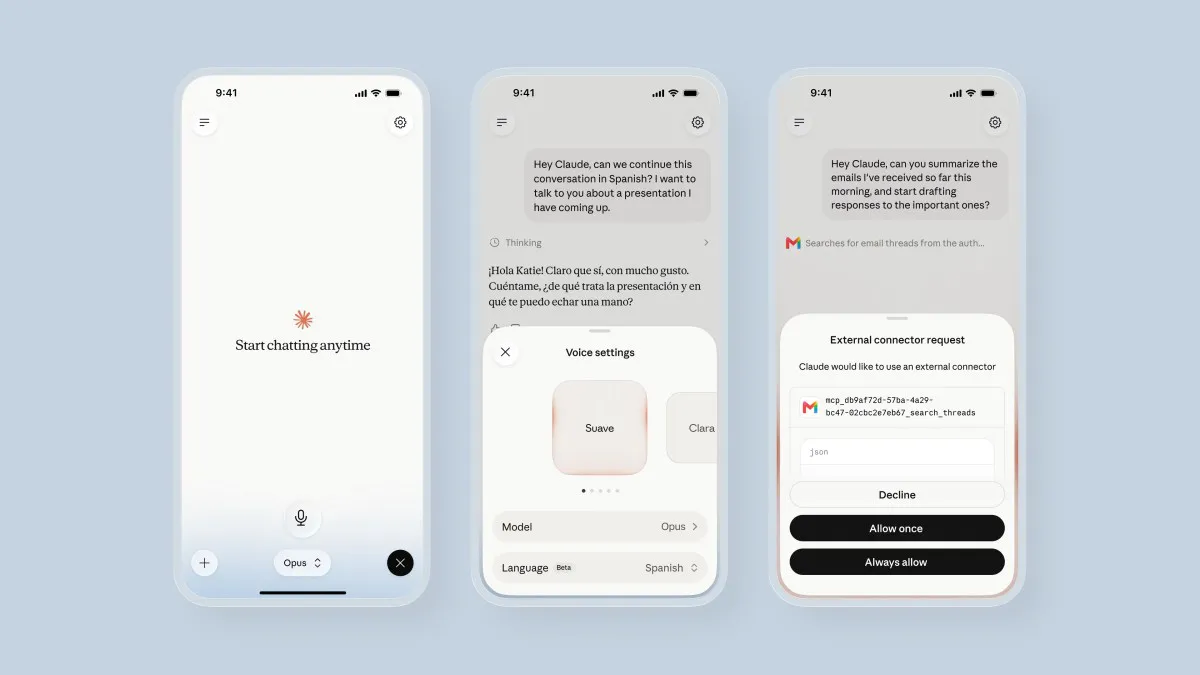
In the fast-paced world of artificial intelligence, companies are continually racing to enhance their offerings and deliver innovative solutions to users. Recently, Anthropic has made a significant stride with updates to its Claude voice mode, aiming to enhance user experience and expand functionality. Just weeks after OpenAI unveiled its family of conversational models, Anthropic's latest updates position Claude as a formidable competitor in the AI landscape, particularly for users seeking advanced voice interactions and productivity tools.
Released initially last year, Claude's voice mode was powered by the Haiku model, which, while capable of quick responses, struggled with more complex interactions. The latest update introduces a trio of new models—Opus, Sonnet, and Haiku—allowing users to select the one that best fits their needs. This update is not just a cosmetic change; it reflects a deeper understanding of user demands for versatility in voice applications.
Expanded Functionality with New Models
With the introduction of the Opus and Sonnet models, users now have access to enhanced capabilities that make Claude more adept at handling a variety of conversational contexts. The significant aspect of this update is that Claude's voice mode will automatically select the last model used in a text chat, leveraging its fastest version by default. This seamless transition between models is designed to streamline user interactions, making voice communication more efficient.
Among the practical applications of this updated voice mode, users can expect improvements in:
- Longer Conversations: Claude is now better equipped to manage extended dialogues, ensuring continuity and relevance.
- Feedback Mechanisms: Users can receive real-time feedback on their communication styles, allowing for personal and professional growth.
- Professional Pitching: The model can assist users in crafting and delivering pitches to clients, enhancing overall business communication.
- Market Research Brainstorming: Claude can facilitate brainstorming sessions, helping teams generate creative ideas based on market insights.
Integration with Productivity Tools
One of the standout features of the updated Claude voice mode is its ability to integrate with various applications, including Gmail, Google Calendar, Slack, Canva, and Notion. This integration allows users to perform multifaceted tasks without switching between platforms, significantly improving productivity. For example, users can instruct Claude to update a meeting slot in Google Calendar, draft an email in Gmail, or create a document in Notion—all through simple voice commands. This level of interoperability sets Claude apart from competitors like OpenAI, which, despite its conversational enhancements, has yet to offer such extensive application integration.
Multilingual Support and Accessibility
In an increasingly globalized market, the ability to communicate in multiple languages is paramount. Earlier this year, Anthropic introduced multilingual support to Claude's voice mode, currently available in beta. Users can now engage with Claude in languages such as English, French, German, Hindi, and more. However, it’s important to note that users must manually specify their preferred language, which could be a barrier for some. This multilingual capability expands Claude's usability across various demographics, catering to businesses and individuals who operate in diverse linguistic environments.
Limitations and Future Directions
While the updates to Claude's voice mode are promising, there are some limitations that users should be aware of. Free users are confined to the Haiku model and can only connect to a single app, which may restrict the overall functionality for those not willing to invest in premium features. Furthermore, Anthropic has not disclosed the specific voice stack used in the updates, which raises questions regarding the underlying technology and its potential limitations. Unlike OpenAI's recent updates that improved conversational depth—such as better handling of interruptions—Claude's voice mode has not announced similar advancements. This could impact the user experience in nuanced conversations.
As the AI landscape continues to evolve, it will be essential for Anthropic to address these limitations and further develop Claude’s capabilities. Future updates could focus on enhancing conversational depth, improving user interface design, and expanding integration with third-party applications. The competitive landscape is fierce, and the demand for advanced AI tools is growing exponentially.
Key Takeaways
- Anthropic has launched updates to Claude’s voice mode, introducing new models: Opus, Sonnet, and Haiku.
- The updated voice mode can now integrate with productivity tools like Gmail, Google Calendar, and Slack, enhancing user efficiency.
- Multilingual support is now available, allowing users to interact in several languages, though manual selection is required.
- Free users are limited to the Haiku model and one app connection, which may hinder full utilization of Claude's capabilities.
- Future updates should address limitations in conversational depth and enhance user experience.
Frequently Asked Questions
What are the new models available in Claude's voice mode?
Claude's voice mode now includes three models: Opus, Sonnet, and the original Haiku model. Users can select between these models based on their specific needs, with the system defaulting to the last model used in text chat. This flexibility allows for tailored interactions that can adapt to different conversational contexts.
How does Claude's voice mode integrate with other applications?
The updated Claude voice mode offers extensive integration with popular productivity tools such as Gmail, Google Calendar, Slack, Canva, and Notion. This functionality enables users to perform tasks like scheduling meetings, drafting emails, and creating documents through simple voice commands, streamlining workflows and improving efficiency.
Is multilingual support available in Claude's voice mode?
Yes, Claude's voice mode now supports multiple languages, including English, French, German, Hindi, and several others. However, users must manually specify which language they wish to use, which may present a challenge for those who switch between languages frequently.
What limitations should users be aware of in the updated Claude voice mode?
While the updates to Claude's voice mode introduce several new features, free users are limited to using the Haiku model and can only connect to one application. Additionally, the lack of transparency regarding the voice stack used in the updates raises questions about the model's performance, particularly in areas like conversational depth and interruption handling.
Comments
The Controversy Surrounding Kimi K3 and Anthropic's Fable: A Deep Dive
The emergence of Kimi K3 has sparked intense debate over its origins and the ethical ramifications of AI model development, particularly in relation to Anthropic's Fable. This article explores these complexities and their implications for the AI landscape.
Related articles


Popular in AI Tools
- OpenAI's GPT-Live: Transforming Voice Interaction with AI
- SpaceX's Grok 4.5: Disruption in AI Coding at Unmatched Prices
- Gaming Data: The Future of Training AI for General Intelligence
- OpenAI's GPT-5.6: A New Era for Microsoft Copilot and Beyond
- The AI Deployment Dilemma: Balancing Autonomy and Governance