Kimi K3: China's AI Revolution with the Largest Open-Source Model
China's Moonshot AI unveils Kimi K3, a groundbreaking 2.8-trillion-parameter open-source AI model that rivals leading U.S. systems, signaling a shift in the global AI landscape.

The release of Kimi K3 by Moonshot AI marks a significant milestone in the rapidly evolving world of artificial intelligence. As the largest open-source AI model to date, boasting a staggering 2.8 trillion parameters, Kimi K3 is challenging the dominance of established players like OpenAI and Anthropic. This launch not only underscores the capabilities of Chinese AI but also highlights a growing trend towards open-source development, a pivotal moment for the industry just ahead of the 2026 World Artificial Intelligence Conference in Shanghai.
Moonshot AI, backed by Alibaba and founded in 2023, is no stranger to the competitive pressures of the AI landscape. After a challenging period following the rise of rival DeepSeek, the company’s strategic pivot to open-source models represents both a comeback and a bold statement of intent. With Kimi K3, they aim to establish themselves as a central player in the global AI ecosystem.

Kimi K3: Architectural Innovations and Features
Kimi K3 is built on groundbreaking architectural innovations that contribute to its impressive performance metrics. At its core, the model utilizes the Kimi Delta Attention mechanism—a hybrid linear attention approach that enhances processing efficiency. This is complemented by Attention Residuals, a novel replacement for traditional residual connections that allows for better scaling.
In practical terms, Kimi K3 features a remarkable 1-million-token context window, a capability that allows it to understand and generate responses based on extensive inputs. This is particularly valuable in complex tasks requiring long-term context retention, such as legal document analysis or multi-turn conversations.
- 2.8 trillion parameters: The largest open-source AI model to date.
- 1-million-token context window: Supports extensive input for complex tasks.
- Competitive pricing: $3 per million input tokens and $15 per million output tokens.
- Integration ready: Compatible with OpenAI SDK, easing adoption for developers.
- Performance benchmarks: Competes closely with top models like OpenAI's GPT-5.6 and Anthropic's Claude.

Performance Benchmarks: Competing with the Best
Initial benchmark results paint a promising picture for Kimi K3. In assessments conducted by analytics firm Artificial Analysis, the model achieved a score of 1,687 on the GDPval-AA v2 benchmark, placing it third overall, just behind Claude Fable 5 Max and GPT-5.6 Sol Max. Furthermore, Kimi K3 secured a second-place finish on the AA-Briefcase benchmark, demonstrating its effectiveness in long-horizon, knowledge-intensive tasks.
Perhaps most impressively, Kimi K3 scored a remarkable 91.2 out of 100 on BrowseComp, a benchmark designed to test high-difficulty information-seeking capabilities. These results indicate that Kimi K3 is not merely a theoretical exercise; it is a practical tool capable of performing complex tasks with a level of accuracy that rivals proprietary competitors.

The Strategic Implications of Kimi K3's Release
The decision to release Kimi K3 as an open-source model is laden with strategic significance. By doing so, Moonshot AI is positioning itself as a leader in the open-source AI community, effectively inviting developers worldwide to leverage its capabilities. This move comes at a time when companies are increasingly seeking alternatives to proprietary models that come with costly API contracts and usage restrictions.
For enterprises, Kimi K3 offers a compelling proposition. Organizations can fine-tune the model to their specific needs, self-host it, or build proprietary systems on top of it—all without being locked into the ecosystems of competitors like OpenAI or Anthropic. This flexibility is particularly attractive in sectors where data privacy and control are paramount.
A Case Study in Autonomous Capabilities
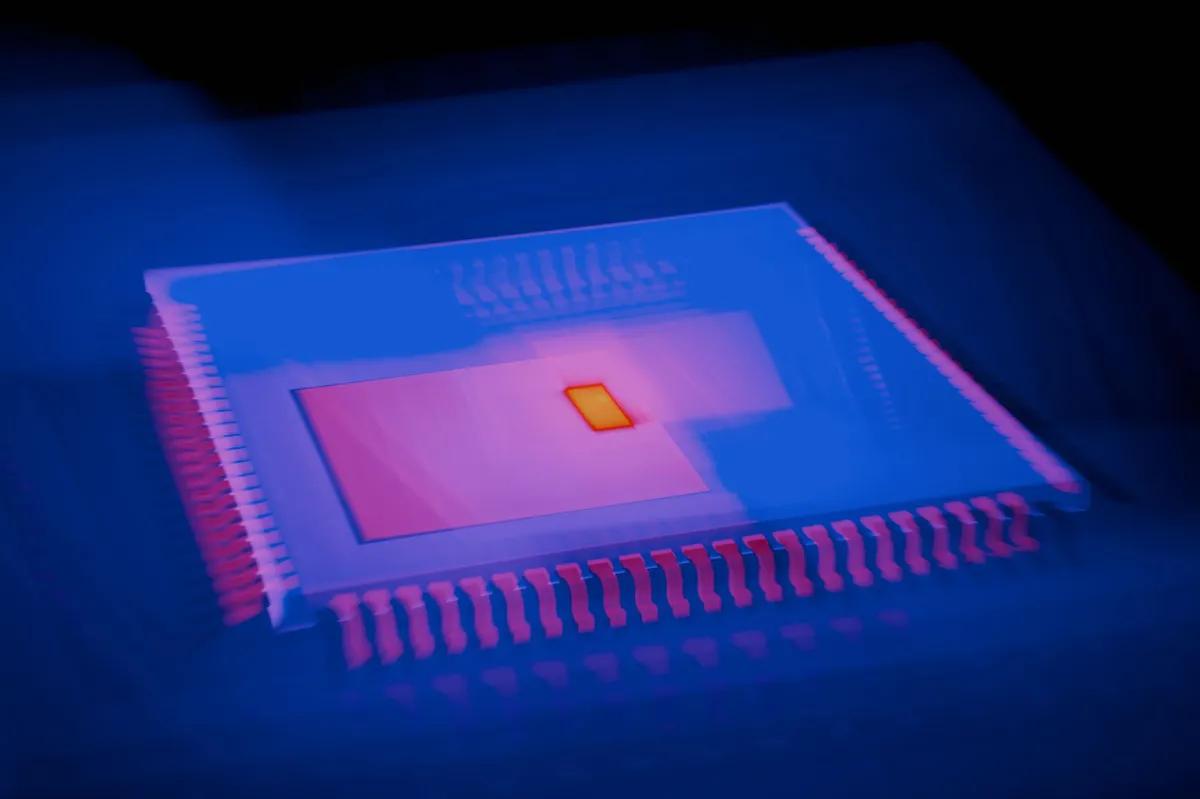
One of the most telling demonstrations of Kimi K3's potential involves its ability to autonomously design a physical chip. In a remarkable 48-hour test, the AI was able to manage the entire chip design process using open-source electronic design automation tools. This included everything from architectural design to optimization and verification, culminating in a functional chip design.
This achievement not only showcases Kimi K3’s technical capabilities but also hints at the future direction of AI. As autonomous agent capabilities develop, the potential applications extend far beyond traditional text generation, encompassing complex engineering tasks and even scientific research.
The Road Ahead for Moonshot AI
To fully understand the significance of Kimi K3, it is essential to consider the trajectory of Moonshot AI itself. Founded by Yang Zhilin, the company quickly rose to prominence within the Chinese AI ecosystem, attracting substantial investment and user engagement. However, the emergence of DeepSeek and its disruptive pricing strategy forced Moonshot to rethink its approach.
The release of Kimi K3, particularly in light of its monumental parameter count, signals a strategic recovery and an ambition to reclaim market share. Moreover, it underscores a broader shift in the global AI landscape towards open-source models, which are increasingly seen as vital for fostering innovation and democratizing access to advanced technologies.
Key Takeaways
- Kimi K3 is the largest open-source AI model, featuring 2.8 trillion parameters.
- The model's performance benchmarks position it competitively against leading proprietary models.
- Open-sourcing Kimi K3 allows developers to integrate and customize the model without vendor lock-in.
- Moonshot AI's strategic pivot illustrates the growing importance of open-source AI in the global market.
- The model's autonomous capabilities suggest significant future applications in engineering and research.
Frequently Asked Questions
What makes Kimi K3 different from other AI models?
Kimi K3 stands out due to its unprecedented size of 2.8 trillion parameters, which significantly enhances its capability to understand context and generate accurate responses. Its architectural innovations, such as Kimi Delta Attention and Attention Residuals, further optimize its performance compared to other models.
How can businesses leverage Kimi K3?
Businesses can utilize Kimi K3 to develop tailored AI solutions without the restrictions of proprietary models. This flexibility allows for self-hosting and fine-tuning the model to meet specific operational needs, potentially leading to cost savings and improved efficiency in various applications.
What are the implications of Kimi K3's open-source release?
The open-source release of Kimi K3 represents a critical shift in the AI landscape, making advanced capabilities more accessible to developers around the world. This democratization can accelerate innovation and increase competition, challenging established players in the AI market.
What future developments can we expect from Moonshot AI?
Given the success of Kimi K3, Moonshot AI is likely to continue investing in open-source initiatives and further developing autonomous capabilities. The company may also explore partnerships with other tech firms and research institutions to expand its influence and foster a collaborative AI ecosystem.
Comments
Navigating the Agent Evaluation Gap in Enterprise AI: What Businesses Need to Know
As enterprises increasingly rely on AI agents, a significant evaluation gap persists between autonomy and trust. This article explores the implications of this gap for businesses and what they can do to mitigate risks.

Related articles

Popular in AI Tools
- OpenAI's GPT-Live: Transforming Voice Interaction with AI
- SpaceX's Grok 4.5: Disruption in AI Coding at Unmatched Prices
- Gaming Data: The Future of Training AI for General Intelligence
- OpenAI's GPT-5.6: A New Era for Microsoft Copilot and Beyond
- The AI Deployment Dilemma: Balancing Autonomy and Governance