Inherent's AI Faraday Surpasses Giants: A New Era in Scientific Research
Inherent, a London-based AI startup founded by DeepMind alumni, claims its AI agent, Faraday, has outperformed larger models from Anthropic and OpenAI in replicating scientific research. This achievement marks a significant step towards building AI that can contribute to scientific discovery, not just verification.
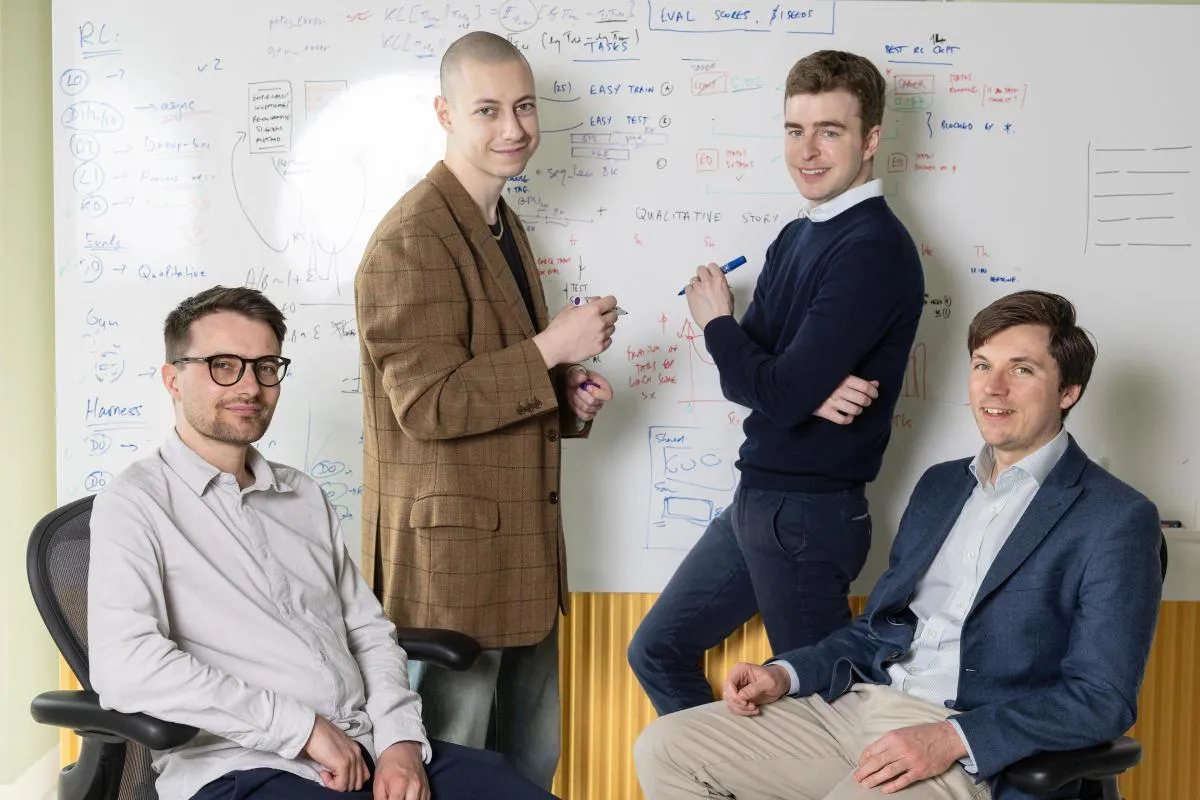
In the rapidly evolving landscape of artificial intelligence, the race to innovate is relentless, and a new competitor has emerged from the shadows. Inherent, a London-based startup founded by alumni of Google DeepMind, has made headlines by claiming its AI system, named Faraday, has surpassed the performance of much larger models developed by industry giants Anthropic and OpenAI. This achievement is not just a technical milestone; it reflects a paradigm shift in how AI can be deployed to enhance scientific research, pushing the boundaries of what we expect from technology in academia and beyond.
Founded in a city known for its burgeoning AI ecosystem, Inherent has largely flown under the radar compared to its better-funded counterparts. However, with a recent $50 million seed round that marked its emergence from stealth, the startup is beginning to reveal its ambitious plans. Faraday has demonstrated a remarkable ability to independently reproduce scientific findings from published papers, a task traditionally reserved for human researchers, thereby setting a new standard for AI applications in the scientific community.
The Challenge of Scientific Replication
Replication of scientific studies is a cornerstone of the scientific method, yet it remains a challenging endeavor. Many PhD students embark on their academic journeys by attempting to replicate established studies, honing their skills in the process. Inherent's co-founder and chief scientist, Edward Hughes, highlights this practice as a fundamental training exercise for budding scientists. “Many PhD students actually start by doing this,” he explains. This context places Faraday's capabilities in a significant light; it isn't merely about outperforming other AI systems but rather about demonstrating a deeper understanding of research methodology.
Faraday's success is particularly noteworthy when compared to Anthropic's Claude Opus 4.8 and OpenAI's GPT-5.5. These models, larger in scale and complexity, are often seen as the benchmarks of AI prowess. In contrast, Faraday operates on a more modest model dubbed Qwen 3.6, which boasts just 27 billion parameters. In AI terms, parameters are key indicators of a model's size and training costs, making Faraday's performance even more impressive.

Innovative Training Approaches
One of the most compelling aspects of Inherent's methodology is its focus on 'research taste.' This concept refers to an AI's ability to discern which experiments are worth pursuing and how to design them effectively. This is where reinforcement learning comes into play. Instead of merely feeding the AI rules and data, Inherent employs a reward-based training model that encourages the AI to explore and learn from its outcomes.
This approach marks a departure from traditional methods that prioritize the rote study of scientific processes. By focusing on fostering an instinctive understanding of research, Inherent aims to equip Faraday with the versatility necessary for future contributions across various scientific fields. Hughes articulates this vision succinctly: “We’re always guided by that north star of building an AI scientist agent and imbuing our agents with taste.”
Collaborative Intelligence in AI
Inherent's philosophy extends beyond technical capabilities; it emphasizes collaboration—both within the AI itself and among its human team. Rather than developing standalone tools, Faraday leverages existing technologies like OpenAI's Codex, mirroring how human researchers often utilize available software rather than creating everything from scratch. This collaborative instinct is foundational to Inherent's operations, which are conducted by a tight-knit team of roughly a dozen employees working together in an office located in King’s Cross, London.
Hughes believes that the unique collaborative environment fostered in their London office contributes significantly to their innovation. “We believe that London is the place to be,” he asserts, pointing to the city's rich pool of AI talent as a major advantage. However, he also acknowledges challenges posed by the UK's 'garden leave' policies, which restrict departing employees from immediately joining or starting rival companies. This practice can stifle innovation, especially in a competitive field like AI.

Future Aspirations and Growth Plans
Looking ahead, Inherent has ambitious plans to scale its operations. The startup aims to expand its workforce to approximately 20 to 25 employees by the end of the year, reflecting its commitment to growing its capabilities and reach. Inherent's focus on world models—a comprehensive understanding of systems and their interactions—positions it as a potential magnet for talent, especially in light of recent changes at DeepMind that have left some staff feeling unsettled.
As the AI sector continues to evolve, the implications of Inherent's advancements could be profound. If Faraday can indeed help fill gaps in scientific knowledge and streamline research processes, it may pave the way for a new era of AI-enhanced discovery. The potential for Faraday to not just replicate but also innovate could redefine the relationship between AI and scientific inquiry.
Key Takeaways
- Inherent's AI agent, Faraday, has outperformed larger models from Anthropic and OpenAI in replicating scientific research.
- Faraday operates on a smaller model with 27 billion parameters, showcasing efficiency and effectiveness.
- The startup emphasizes a unique training approach that fosters 'research taste' through reinforcement learning.
- Inherent plans to expand its team significantly, aiming to attract talent from the vibrant London AI scene.
- Collaboration is a core value, with Faraday leveraging existing tools rather than reinventing the wheel.
Frequently Asked Questions
What makes Inherent's Faraday unique compared to other AI models?
Faraday distinguishes itself by outperforming larger models like Anthropic's Claude Opus and OpenAI's GPT-5.5 despite operating on a smaller framework. Its unique approach to training, emphasizing 'research taste' and using reinforcement learning, allows it to understand the nuances of scientific inquiry better than traditional models.
How does reinforcement learning contribute to Faraday's capabilities?
Reinforcement learning is crucial for Faraday as it allows the AI to learn from outcomes rather than strictly following predefined rules. This method encourages the AI to explore various research avenues and engage in creative problem-solving, enhancing its ability to contribute meaningfully to scientific research.
What are the implications of Inherent's success for the future of AI in research?
Inherent's success with Faraday could signal a shift in how AI is utilized in research settings. If AI can effectively replicate and even innovate upon existing studies, it may lead to faster scientific discoveries, reduced costs in research, and the potential for AI to take on more complex roles in various scientific fields.
How does London's AI ecosystem support startups like Inherent?
London's AI ecosystem is bolstered by a dense network of talent, investment, and innovation. The presence of major tech companies and research institutions fosters collaboration and knowledge transfer, creating an environment where startups like Inherent can thrive. However, challenges like 'garden leave' policies also pose hurdles that could impact growth and talent acquisition.
Comments
The Enigma of Ox Alpha: Unraveling the Mystery Behind the Stealth AI Model
The release of Ox Alpha, a new AI model, has sparked intense speculation about its origins and developers. As industry experts weigh in, we explore the implications of this 'stealth model' and its potential impact on the AI landscape.

Related articles


Popular in AI Tools
- OpenAI's GPT-Live: Transforming Voice Interaction with AI
- SpaceX's Grok 4.5: Disruption in AI Coding at Unmatched Prices
- Gaming Data: The Future of Training AI for General Intelligence
- OpenAI's GPT-5.6: A New Era for Microsoft Copilot and Beyond
- The AI Deployment Dilemma: Balancing Autonomy and Governance