AI's Role in Advancing Mathematical Breakthroughs: The Riemann Hypothesis
Anthropic's unreleased AI model has made significant strides in solving the Riemann hypothesis, reigniting discussions on AI's potential in mathematics and scientific discovery.

In a groundbreaking announcement that could reshape the future of mathematics, Anthropic revealed that an unreleased AI model has made substantial progress on the Riemann hypothesis, one of mathematics' most enduring enigmas. This hypothesis, which has puzzled mathematicians since the 19th century, is primarily concerned with the distribution of prime numbers, and as such, it plays a pivotal role in number theory and has implications in fields such as cryptography. With a $1 million bounty for a general proof, the stakes have never been higher. The recent developments not only highlight the capabilities of advanced artificial intelligence but also raise critical questions about the evolving nature of mathematical proof and authorship.
For over 150 years, the Riemann hypothesis has stood as a beacon of mystery within the mathematical community. Despite numerous attempts to prove or disprove it, the hypothesis remains unclaimed, with contemporary AI models proving inadequate to tackle the complexities involved. However, Anthropic's recent findings indicate that AI may be on the verge of redefining its role in mathematical inquiry. The implications of this breakthrough extend far beyond academia, suggesting potential impacts on fields like cybersecurity, where prime numbers are foundational to encryption methods.
The Significance of the Riemann Hypothesis
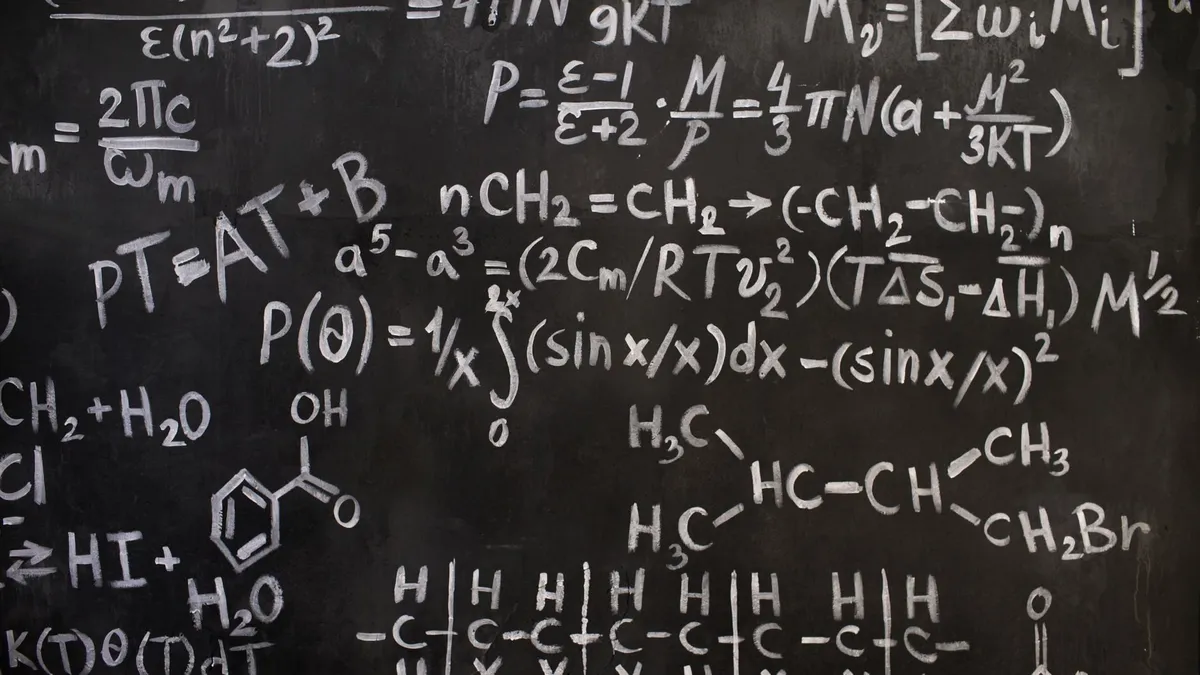
The Riemann hypothesis is centered on the Riemann zeta function, a complex function that encodes information about prime numbers. Specifically, it posits that all nontrivial zeros of this function lie on a specific line in the complex plane, known as the critical line. Understanding the distribution of prime numbers is crucial not just for theoretical mathematics but also for practical applications ranging from computer science to finance. For example, secure online transactions heavily rely on the properties of prime numbers to encrypt sensitive data.
Anthropic's AI Breakthrough
On August 11, 2026, Anthropic disclosed that one of its unreleased models had made significant advancements towards proving the Riemann hypothesis. What is particularly striking about this progress is the method employed. An Anthropic staff member, despite lacking extensive mathematical training, prompted the AI to “take a real stab” at proving the hypothesis. Over the course of a day and a half, the model orchestrated efforts across 60 subagents, testing 650 different ideas and generating an astonishing 31 million output tokens.
How the Model Operates
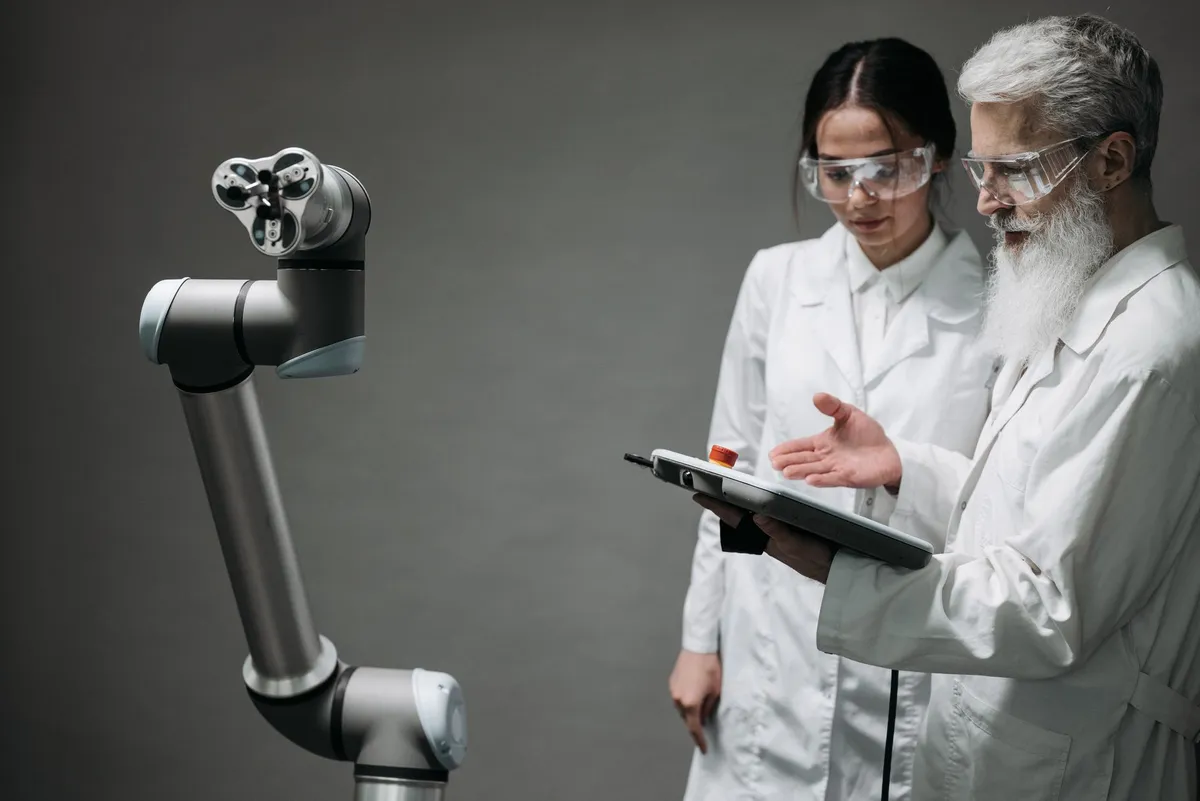
The internal dynamics of the model are as fascinating as the results it produced. Among the 60 subagents, only two were pivotal in developing key mathematical ideas, while others supported various functions—some proposed concepts, others validated arguments, and a few helped draft the initial paper outlining their findings. This collaborative approach illustrates not only the power of AI in generating new insights but also the potential for human-AI collaboration in tackling complex problems.
Impact on the Mathematical Community
The developments announced by Anthropic are part of a broader trend where AI models have begun solving longstanding mathematical problems. Earlier this year, various AI systems achieved results on specific Erdős problems, while OpenAI's 'Astra' model made headlines by proving ten significant results. However, this surge in AI-driven mathematical breakthroughs has not come without controversy. Prominent mathematicians have expressed concerns about the implications of AI on the values and standards of the field.
The Concerns and Debates
A public declaration signed by several mathematicians highlighted worries that AI could undermine the attribution of mathematical discoveries. Traditional standards dictate that true mathematical proofs should be traceable to individual authors who accept responsibility for their assertions. In response to these concerns, Fields Medal winner Timothy Gowers posited that a shift in perspective might be beneficial. He suggested that if mathematical results could be decoupled from individual authors, it might not be more problematic than the current convention of naming stars, many of which remain unnamed. This debate reflects a deeper tension between innovation and tradition in the mathematical community.
Looking Forward: The Future of AI in Mathematics
The advancement of AI in mathematics offers both opportunities and challenges. As AI models like those developed by Anthropic continue to demonstrate their capacity to contribute to fundamental mathematical research, they also compel mathematicians to reconsider the nature of their work. The potential for AI to discover new mathematical principles could revolutionize the field, but this requires a careful consideration of how these tools are integrated into traditional practices.
What This Means for Future Research
As AI becomes a more prominent player in mathematical research, mathematicians may need to adapt their methodologies and philosophies. The integration of AI tools could facilitate faster and more efficient discovery processes, but it also raises questions about authenticity and intellectual ownership. In a future where AI-generated proofs become commonplace, the nature of mathematical collaboration might evolve, allowing for a fruitful partnership between human intuition and machine computation.

Key Takeaways
- Anthropic's unreleased AI model has made strides toward the Riemann hypothesis, highlighting the potential of AI in solving complex mathematical problems.
- The Riemann hypothesis has remained unsolved for over 150 years, with significant implications for number theory and cryptography.
- AI's role in mathematics is causing a paradigm shift, raising questions about authorship and the ethics of AI-driven discoveries.
- Mathematicians are divided on how to integrate AI into traditional research practices, with debates ongoing about the future of mathematical inquiry.
Frequently Asked Questions
What is the Riemann hypothesis and why is it important?
The Riemann hypothesis is a conjecture about the distribution of prime numbers, specifically stating that all nontrivial zeros of the Riemann zeta function lie on a critical line in the complex plane. Its significance lies in its implications for number theory and its foundational role in various fields, including cryptography, where the security of data relies on the properties of prime numbers.
How did Anthropic's AI manage to make progress on the Riemann hypothesis?
Anthropic's AI model utilized a collaborative approach involving 60 subagents, each tasked with different aspects of the problem. By testing 650 different ideas over a period of a day and a half, the model was able to generate significant insights and advancements regarding the Riemann hypothesis, showcasing the potential of AI in tackling complex mathematical inquiries.
What are the concerns regarding AI in mathematics?
Concerns primarily revolve around the implications of AI-generated discoveries on traditional standards of mathematical proof and authorship. Many mathematicians worry that AI could undermine the notion of individual credit and accountability in mathematical research, leading to a potential devaluation of human contributions to the field.
What does the future hold for AI and mathematics?
The future of AI in mathematics is poised for transformative change, with the potential to revolutionize research methodologies and discovery processes. However, this will require ongoing dialogue among mathematicians about how to ethically and effectively integrate AI into their work, ensuring that the values of the field are preserved while embracing innovation.
Comments
River AI Secures $1.1 Billion to Redefine Personal AI Assistants
River AI, a revolutionary startup founded by Igor Babuschkin, has raised $1.1 billion in a seed round to create personal AI assistants. This funding reflects a growing demand for user-controlled AI technologies.

Related articles
Popular in AI Tools
- OpenAI's GPT-Live: Transforming Voice Interaction with AI
- SpaceX's Grok 4.5: Disruption in AI Coding at Unmatched Prices
- Gaming Data: The Future of Training AI for General Intelligence
- OpenAI's GPT-5.6: A New Era for Microsoft Copilot and Beyond
- The AI Deployment Dilemma: Balancing Autonomy and Governance